


 RBI Raises Repo Rate to 5.50% in Hawkish Shift on Inflation Risks
  Robinhood Buys $25 Million in Bitcoin for Corporate Treasury
  Fed Minutes Signal Another Rate Hike by Year-End
  Solana User Growth Jumps 33%, Outpacing Ethereum and Chainlink
  Bitcoin Bull Cycle Still Early as XRP, NEAR Consolidate
  Zcash Privacy Demand Rises as AI Exposes Bitcoin Transactions
  Evernorth XRPN Nasdaq Listing Delayed to October 12
  US Dollar Hits 18-Month High as Fed Signals More Rate Hikes
  Oil Prices Rise as Gulf Hurricane and Middle East Supply Risks Mount
  Bitcoin Price Falls Below $83K as Liquidations Hit $697M
  BofA Raises Coinbase Stock Target to $203 on Stablecoin Growth
  DogecoinVM Makes DOGE Transactions 300x Faster
  Trump Opens Tax-Exempt Dyed Diesel Access as Fuel Prices Surge


 Add as a preferred source on Google
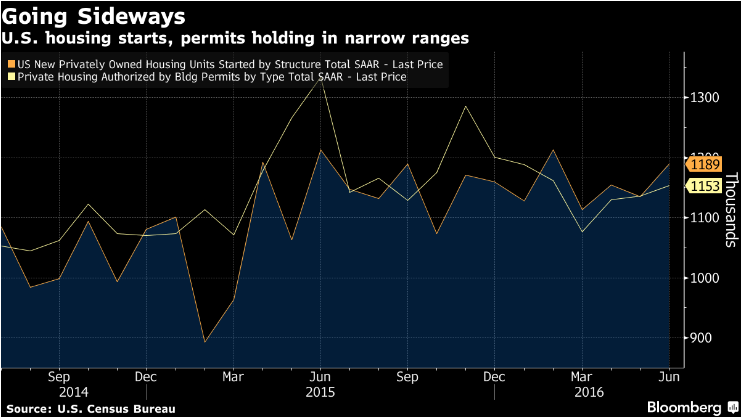
US Commerce Department data showed on Tuesday that new-home construction in the U.S. rose more than forecast in June, a sign that demand for housing continues to firm heading into the second half of the year. Housing starts have remained in a steady but tepid recovery, rising 4.8% m/m to a seasonally adjusted annual rate of 1.189 million in June. The uptick was largely driven by a jump in starts in the West and the Northeast, two of the pricier regions in the country.
Encouragingly, most of the increase was concentrated in the less-volatile single-family segment, but the pace of multi-family construction also rose on the month. Starts on single-family homes, which account for roughly two-thirds of new construction, rose 4.4% in June from May to 778,000. May single-family starts were revised lower. Starts on multifamily buildings rose 1.6% from the prior month to 392,000 units in June.
New applications for building permits rose 1.5% to 1.153 million, from a downwardly revised May figure. Permits have lagged behind housing starts since February, which suggests it will be difficult to sustain last month’s gain in home building. Also, the starts data, while very volatile from month to month, have held in a narrow range over the past year, indicating residential real estate will have trouble adding to its post-recession rebound.
Nevertheless, the report adds to the series of solid U.S. economic data releases that have revived hopes of the Federal Reserve raising interest rates this year. Fed funds futures rates show investors see almost a 50/50 chance that the U.S. central bank will raise rates by its December 2016 meeting, according to CME Group's Fed Watch tool. Chances of a rate hike were below 20 percent less than a month ago.
"Continued job creation coupled with rising wages and low interest rate bodes well for a broader rebound in housing demand as well as consumer spending. Taken together with last week's strong retail sales print, this morning's housing report is supportive of our second quarter growth outlook which suggests real GDP should bounce back above the 2.5% mark," said TD Economics in a report.
Existing-home sales figures for June which will be released on Thursday and new home sales data scheduled to be released on Tuesday, July 26 will be watched. U.S. dollar rose to a four-month high Tuesday following stronger-than-expected U.S. homebuilding numbers. The dollar index is extending Tuesday's gains and is at 97.08 at around 1045 GMT.







