
According to latest non-farm payroll report, US unemployment rate is at 4.9 percent as of July and is now being considered that the rate has reached long-term normal level. Technically speaking, yes, the rate has reached the long-term normal level then why people are cheering at Donald Trump’s (the republican presidential nominee) rally when he talks about bringing back jobs and bringing people back to the labor force? That is because this number is misleading.
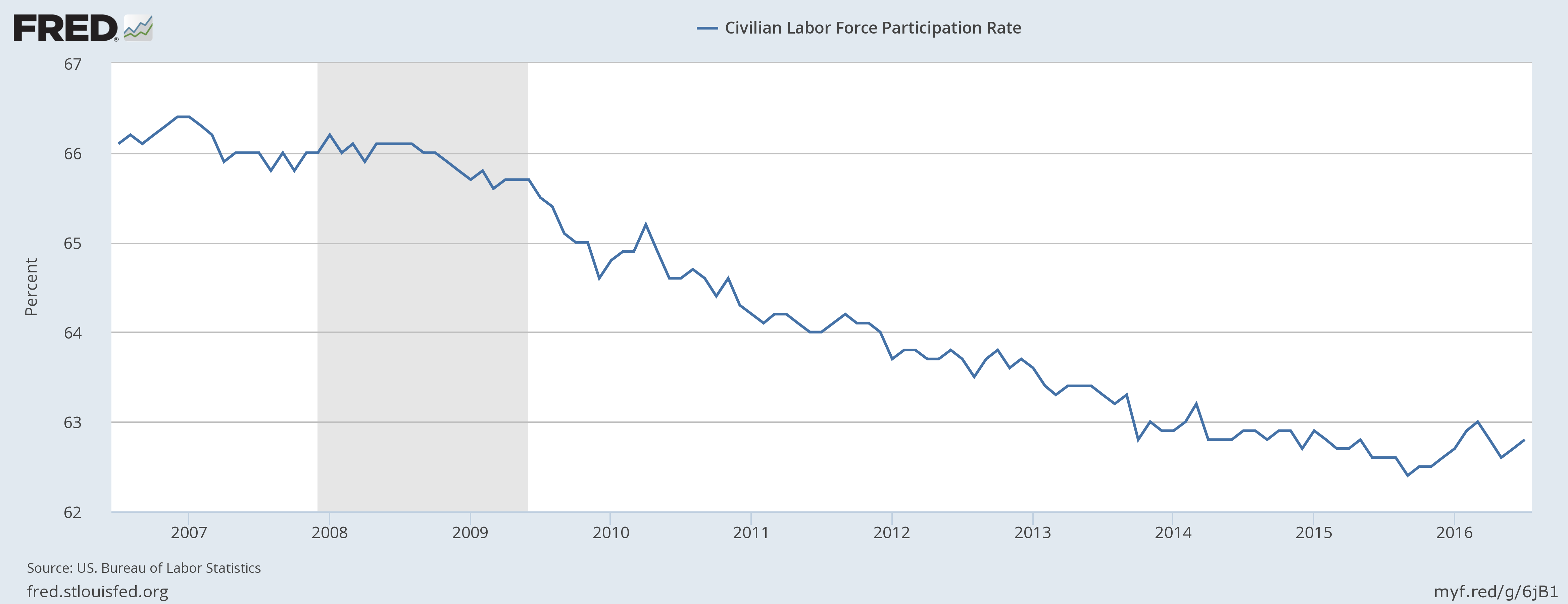
Actually, the way this rate is viewed is misleading. Unemployment rate drops not just because of increased employment, it drops when people leave the workforce, in other words when the participation rate drops. Since the 2008/09 crisis and from well before that, many people, as much 12.1 million has left the workforce due to frustrations, lack of skills, and technology takeover.
Let’s check the data-
Since 2000, when the participation rate peaked at 67.3 percent, 12.1 million people have left the workforce. If you calculate that number since the crisis of 2008/09 the figure is about 7 million. Now deducting the aged and those who has gone into higher studies, if you just simply add these people back to the workforce, the unemployment rate jumps up to 7.2 percent, which is quite ugly and poses doubts over the effectiveness of the monetary policy in reducing employment that has been credited with bringing back jobs. However, Federal Reserve policymakers do recognize this issue and recent days there have been lots of talks with regard to structural unemployment that could have been a factor behind lower wages and growth.

