


 RBI Raises Repo Rate to 5.50% in Hawkish Shift on Inflation Risks
  Fed’s Logan Signals 50 Basis Points More in Rate Hikes
  BlackRock’s Rick Rieder Favors Bonds Over Stocks as Treasury Yields Surge
  Fed Unveils Stablecoin Rules Under GENIUS Act
  RBA Hikes Interest Rate to 4.60% as Inflation Risks Rise
  RBA Set for September Rate Hike as Inflation Stays High
  Fed’s Hammack Says Bond Yield Surge Is Not Driven by Inflation Fears
  Yen in Focus as BOJ, Fed Rate Hikes Reshape Currency Markets


 Add as a preferred source on Google
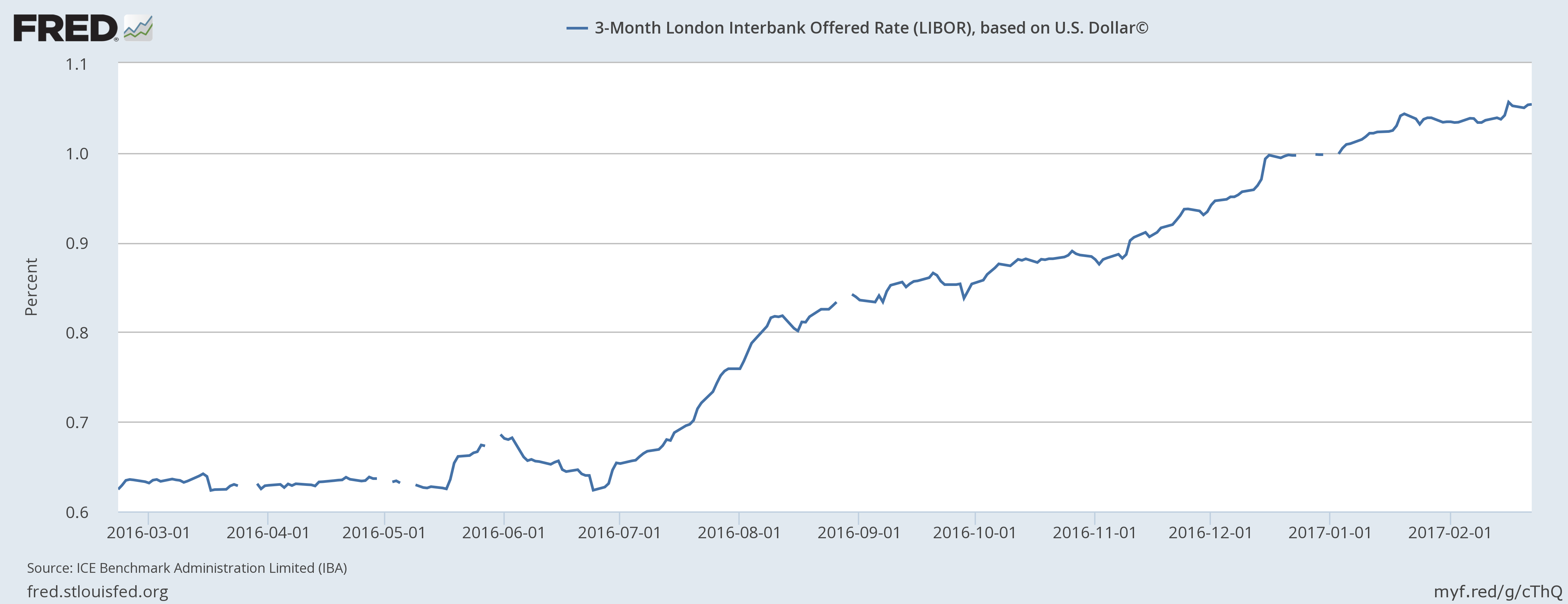
The cost of funding in US dollar reached the highest level since April 2009 as the interest rate reached just below 1.1 percent yesterday. The cost for banks to borrow in US dollar jumped by the most yesterday since December 2015, when the US Federal Reserve increased interest rates for the first time since the great recession of 2008/09. The USD Libor (London inter-bank offered rate) rose by 2.878 basis points to 1.09278 percent yesterday.
While an increase in the Libor pushes up other costs of funding, a rise not necessarily poses threats to the stock market. The majority of the rise is due to increases in the interest rate from Federal Reserve and the expectations that the rates would rise faster than expected.
Another key funding indicator, TED spread has eased from 67 basis points reached in last September but is still elevated at 54 basis points. TED spread is an important indicator as it measures investors’ and banks’ basis demands over the safe haven treasury.







