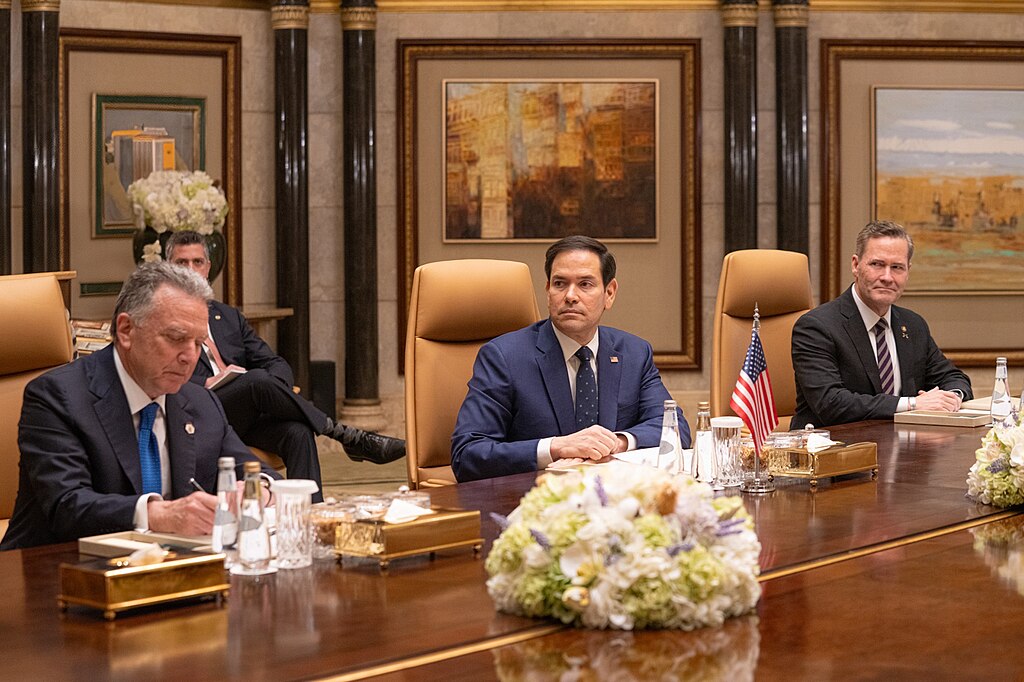
U.S. and Ukrainian officials reported “productive” progress after a new round of peace talks on Sunday aimed at advancing a potential Russia-Ukraine peace deal. The meeting, held in Florida and led by U.S. Secretary of State Marco Rubio and Ukraine’s newly appointed chief negotiator Rustem Umerov, focused on securing a viable pathway for Ukraine to remain sovereign and independent as the war exceeds three years.
Rubio described the discussions as cautiously optimistic, noting that both sides share a commitment not only to ending the conflict but also to laying the foundation for Ukraine’s long-term security and prosperity. The talks are part of a renewed U.S. peace blueprint that initially drew criticism for appearing to favor Russia, which launched its full-scale invasion in 2022.
The U.S. delegation also included special envoy Steve Witkoff and Jared Kushner, senior adviser to President Donald Trump. Witkoff is expected to travel to Moscow this week for follow-up discussions with Russian officials—a key step as Washington seeks a negotiated solution involving all parties.
Trump, who has repeatedly pledged to end the war quickly, has expressed frustration at the difficulty of achieving a deal, despite his claimed rapport with Russian President Vladimir Putin. His team has pressured Kyiv to consider major concessions, including territorial compromises, a stance Ukraine has pushed back against as Russian forces continue to advance.
Sunday’s talks came amid political turbulence in Kyiv after the resignation of previous negotiator Andriy Yermak over a corruption scandal. Trump referenced the scandal, calling it “not helpful,” while Umerov emphasized that the U.S. remains supportive of Ukraine’s priorities.
Umerov said discussions covered all key issues facing Ukraine, including energy infrastructure devastated by Russian attacks and the ongoing domestic political crisis. Ukrainian leaders, including President Volodymyr Zelenskiy, insist they will not accept an unfavorable deal even as the country faces one of its most challenging periods.
U.S. and Ukrainian negotiators say more work lies ahead, with outcomes dependent on upcoming contacts with Moscow, but both sides signaled cautious optimism after the Florida talks.