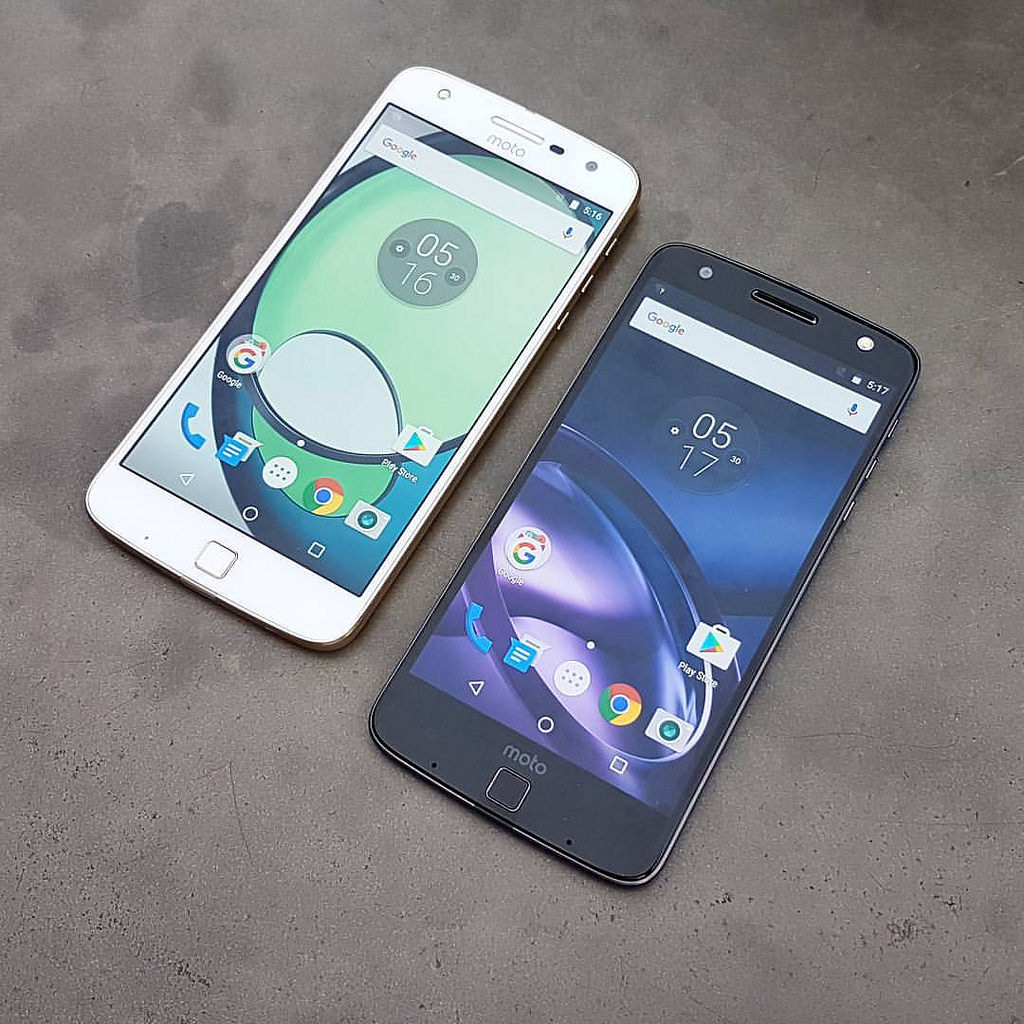
Motorola made huge waves with its first batch of modular phones last year in the form of the Moto Z lineup. For its next iteration of the revolutionary units, the company is thinking about making the Z2 play slimmer. This really doesn’t make a lot of sense since the phone is already one of the thinnest around and it actually has the potential to shorten the battery life.
As VentureBeat reports, thick and hefty are two words that really don’t apply to the Moto Z lineup of modular phones. On their own, the gadgets are already incredibly thin despite offering tremendous battery life. The subsidiary company of Lenovo seems to think that 7mm is too thick for the Z Play, which is why it’s going it’s going to make it slimmer, thus resulting in a battery pack of only 3000mAh.
The original Z Play had a battery capacity of 3510mAh, which was one of its most attractive features. This effectively placed its usage time at a whopping 50 hours on paper. By reducing that capacity to the planned pack, it would shave up to 20 hours from its original offering.
At the same time, the internal hardware of the Z Play is set to get some enhancements, including Qualcomm Snapdragon 626 octa-core processor, 4GB of RAM, and 64GB of internal memory. It would seem that the display will remain relatively the same, which is basically a 5.5-inch AMOLED display, with a resolution of 1080x1920.
Even with those improved features, however, reducing the battery life of the Z Play in favor of appearance has the potential to make it a less appealing prospect for a lot of users. In such a case, users might as well just go with the basic Moto Z since it’s just going to be another run of the mill modular phone anyway, Android Police points out.