
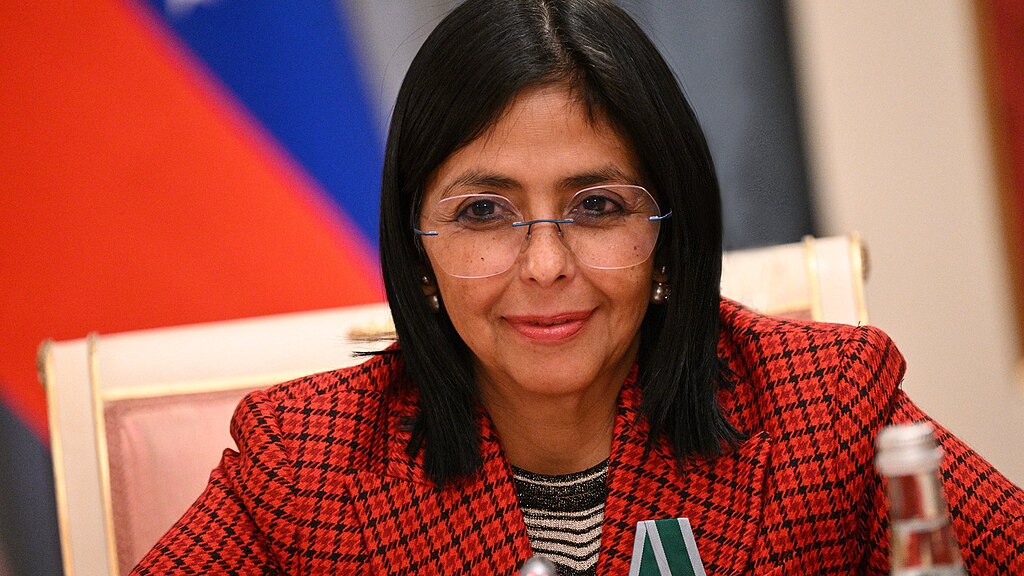
Venezuela and the United States have taken another step toward restoring diplomatic relations after years of tension, following a high-level meeting in Caracas between interim President Delcy Rodríguez and U.S. envoy Laura Dogu. Both governments confirmed that the talks took place at the Miraflores presidential palace, signaling progress in efforts to rebuild bilateral ties that were severed in 2019.
In an official statement, the Venezuelan government said the meeting focused on advancing a shared work agenda between the Bolivarian Republic of Venezuela and the United States. Foreign Minister Yvan Gil later explained on state television that discussions covered a “common agenda,” with key emphasis on energy cooperation, trade, political dialogue, and broader economic issues. These areas are seen as central to Venezuela–U.S. relations as both sides explore pathways to normalization.
Gil also announced that Félix Plasencia, a former foreign minister and ex-ambassador to China, will travel to Washington in the coming days to serve as Venezuela’s diplomatic representative. His visit is expected to further formalize diplomatic engagement and maintain momentum in the ongoing talks. The meeting was also attended by Jorge Rodríguez, head of Venezuela’s National Assembly and brother of the interim president, underscoring the political importance of the dialogue.
According to the government statement, both countries have agreed to follow a roadmap aimed at addressing bilateral issues through diplomatic dialogue grounded in mutual respect and international law. The U.S. embassy in Venezuela echoed this message on social media, noting that Dogu reiterated the three-phase approach outlined by U.S. Secretary of State Marco Rubio: stabilization, economic recovery and reconciliation, and political transition.
The renewed engagement follows significant developments in Venezuela, including the capture of former President Nicolás Maduro, reforms to the country’s oil law, and the release of some political prisoners. The two nations have also reached an agreement allowing up to $2 billion in Venezuelan crude oil exports to the United States. Additionally, Rodríguez recently announced a proposed amnesty law for hundreds of detainees, a move welcomed by opposition leaders and human rights groups. Together, these steps highlight a cautious but notable shift in Venezuela–U.S. relations.


