


 Palantir Stock Jumps After Strong Q4 Earnings Beat and Upbeat 2026 Revenue Forecast
  Anthropic Eyes $350 Billion Valuation as AI Funding and Share Sale Accelerate
  Nvidia Confirms Major OpenAI Investment Amid AI Funding Race
  Nvidia Nears $20 Billion OpenAI Investment as AI Funding Race Intensifies
  SpaceX Seeks FCC Approval for Massive Solar-Powered Satellite Network to Support AI Data Centers
  Nintendo Shares Slide After Earnings Miss Raises Switch 2 Margin Concerns
  Baidu Approves $5 Billion Share Buyback and Plans First-Ever Dividend in 2026
  Sam Altman Reaffirms OpenAI’s Long-Term Commitment to NVIDIA Amid Chip Report
  Oracle Plans $45–$50 Billion Funding Push in 2026 to Expand Cloud and AI Infrastructure
  AMD Shares Slide Despite Earnings Beat as Cautious Revenue Outlook Weighs on Stock
  TSMC Eyes 3nm Chip Production in Japan with $17 Billion Kumamoto Investment
  Instagram Outage Disrupts Thousands of U.S. Users
  SpaceX Prioritizes Moon Mission Before Mars as Starship Development Accelerates
  Global PC Makers Eye Chinese Memory Chip Suppliers Amid Ongoing Supply Crunch
  SoftBank and Intel Partner to Develop Next-Generation Memory Chips for AI Data Centers
  SoftBank Shares Slide After Arm Earnings Miss Fuels Tech Stock Sell-Off


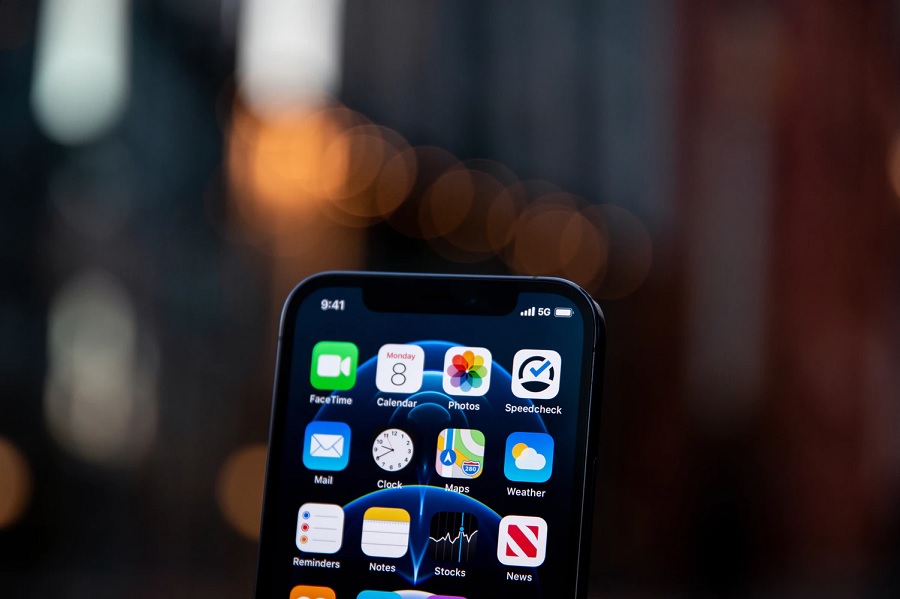
Apple has finally released its widely discussed privacy feature in iOS 14.5 that requires developers to seek users’ permission before they can be tracked across apps and websites. It turns out that there are certain instances where the system-wide setting for app tracking is disabled by default.
Why the ‘Allow Apps to Request to Track’ toggle can’t be used on some devices
It took around seven months before the App Tracking Transparency feature officially launched for iOS 14 devices. For the most part, it appears to be working as it should, and users have encountered app prompts inquiring whether they want to be tracked or not across apps and websites.
In the revamped Privacy settings, users can set tracking permissions per app. There is also a toggle in the Tracking menu that serves as a system-wide toggle labeled: “Allow Apps to Request to Track.” Some have found that this option was disabled by default, but others discovered that this section is grayed out and cannot be toggled.
It appears that this is not a bug. In an Apple support page, first spotted by MacRumors, Apple provided three instances where the “Allow Apps to Request to Track” toggle cannot be used. This option will be unusable for devices with child accounts, devices with an Apple ID affiliated to an educational institution, and devices using an Apple ID created in the last three days.
Apple also clarified that, for the three circumstances mentioned, requests for app tracking permission are denied by default. Apps will also be unable to acquire IDFA of devices that matched those descriptions. “If the status of your account or device changes, and you subsequently choose to enable ‘Allow Apps to Ask to Track,’ then the app's next request to track will display the permission prompt to you,” Apple added.
Other significant features deployed via iOS 14.5
The release of iOS 14.5 follows the official launch of the AirTag. Apple’s long-awaited UWB tracker can only be used with devices that run on this software update. Apple has also officially released the feature that allows iPhone users to unlock their devices using their Apple Watches if they are wearing face masks, and using Face ID would unsafe or inconvenient.
Another previously tested feature that officially launched on iOS 14.5 is the introduction of new Apple Maps functions letting drivers report road accidents and hazards, which is similar to the popular app Waze. iPhone 12 users will also be delighted to know that the latest update carries the dual-SIM 5G support.
Featured photo by Frederik Lipfert on Unsplash













