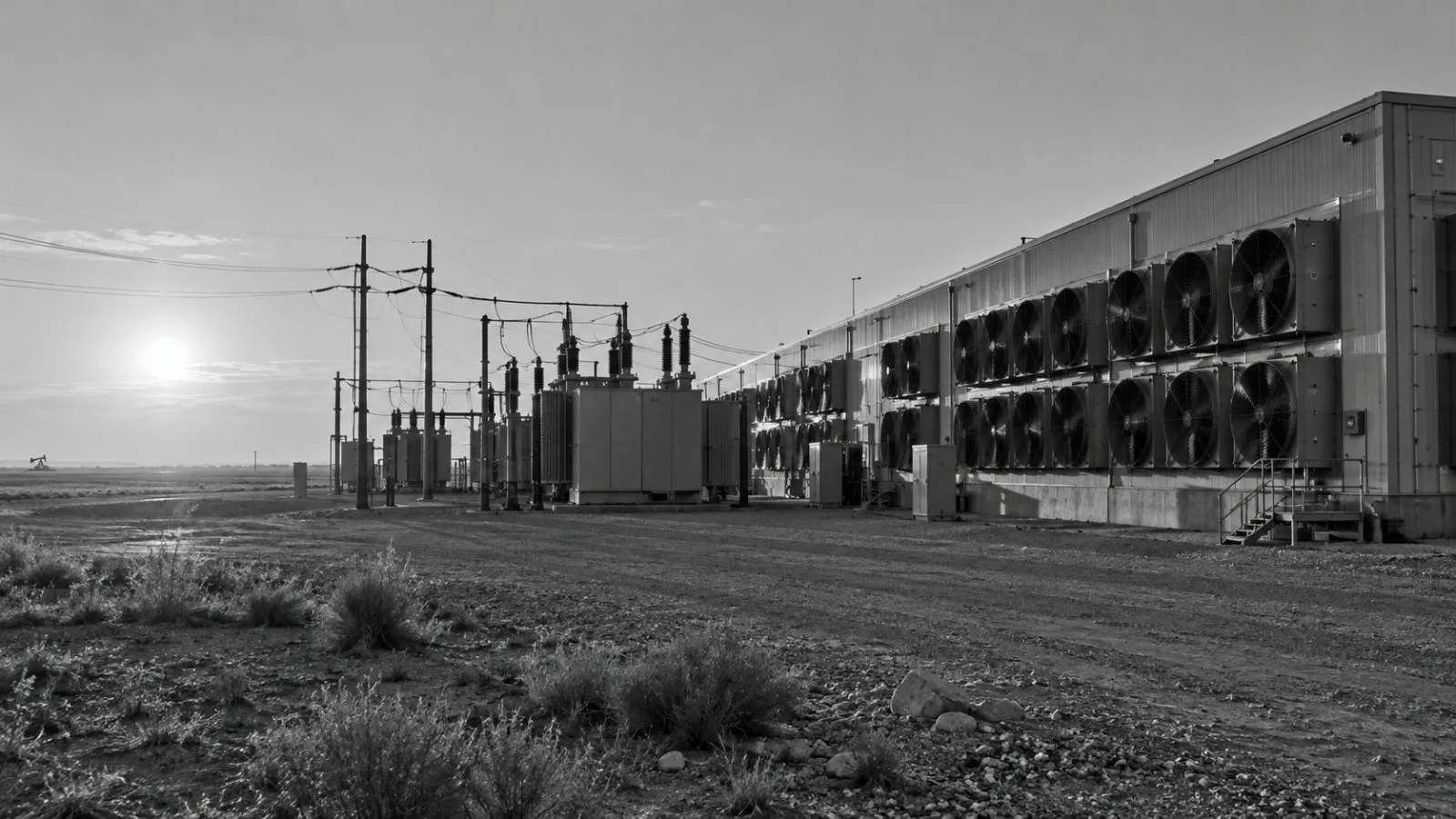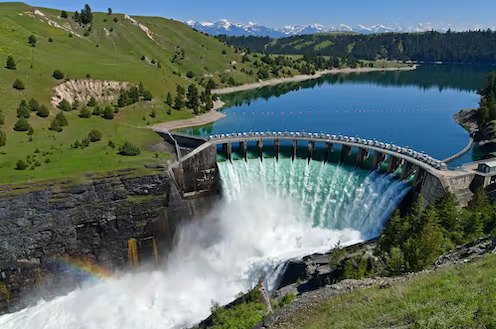
If you’ve ever observed a river rushing down a mountain or played in the waves at the beach, you’ve felt that moving water contains a lot of energy. A river can push you and your kayak downstream, sometimes very quickly, and waves crashing into you at the beach can knock you back, or even knock you over.
There is a long history of harnessing the energy in the flowing waters of rivers to do useful work. For centuries, people used water power to grind grain to make flour and meal. In modern times, people use water power to generate clean electricity to help power buildings, factories and even cars.
Energy in flowing waters
The energy in these moving waters comes from gravity. As part of the Earth’s water cycle, water evaporates from the Earth’s surface or is released from plants. When the released water vapor is carried to cooler, higher altitudes like mountainous regions, it condenses into cloud droplets. When these cloud droplets become big enough, they fall from the sky as precipitation, either as a liquid (rain) or, if it is cold enough, as a solid (snow). Over land, precipitation tends to fall on high altitude areas at first.
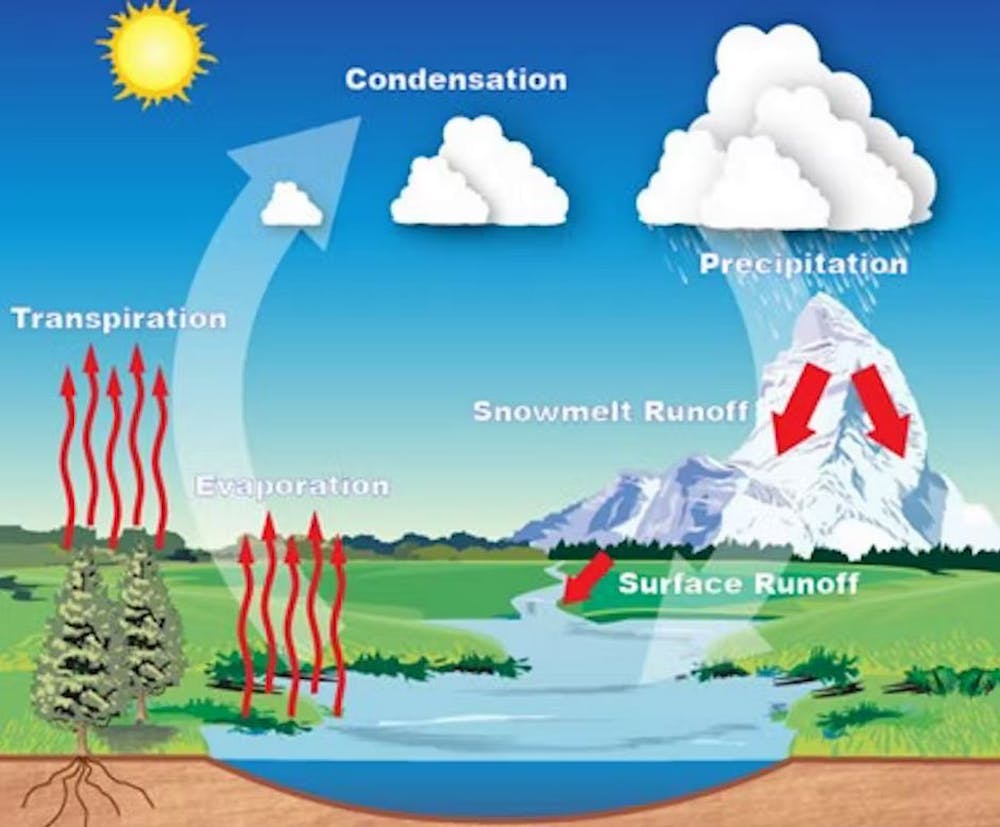
The water cycle. National Weather Service
The pull of gravity causes the water to flow. If the water falls as rain, some of it flows downhill into natural channels and becomes rivers. If the water falls as snow, it will slowly melt into water as temperatures warm and follow the same paths. The rivers that form consist of water from precipitation starting at high altitudes and flowing down the steep slopes of mountains.
Converting flowing water to electricity
Hydropower facilities capture the energy in flowing water by using a device called a turbine. As water runs over the blades of a turbine – kind of like a giant pinwheel – they spin. This spinning turbine is connected to a shaft that spins inside a device called a generator, which uses an effect called induction to convert energy in the spinning shaft to electricity.
There are two main kinds of hydropower facilities. The first kind is called a “run-of-the-river” hydropower facility. These facilities consist of a channel to divert water flow from a river to a turbine. The electricity production from the turbine follows the timing of the river flow. When a river is running full with lots of spring meltwater, it means the turbine can produce more electricity. Later in the summer, when the river flow decreases, so does the turbine’s electricity production. These facilities are typically small and simple to construct, but there is limited ability to control their output.
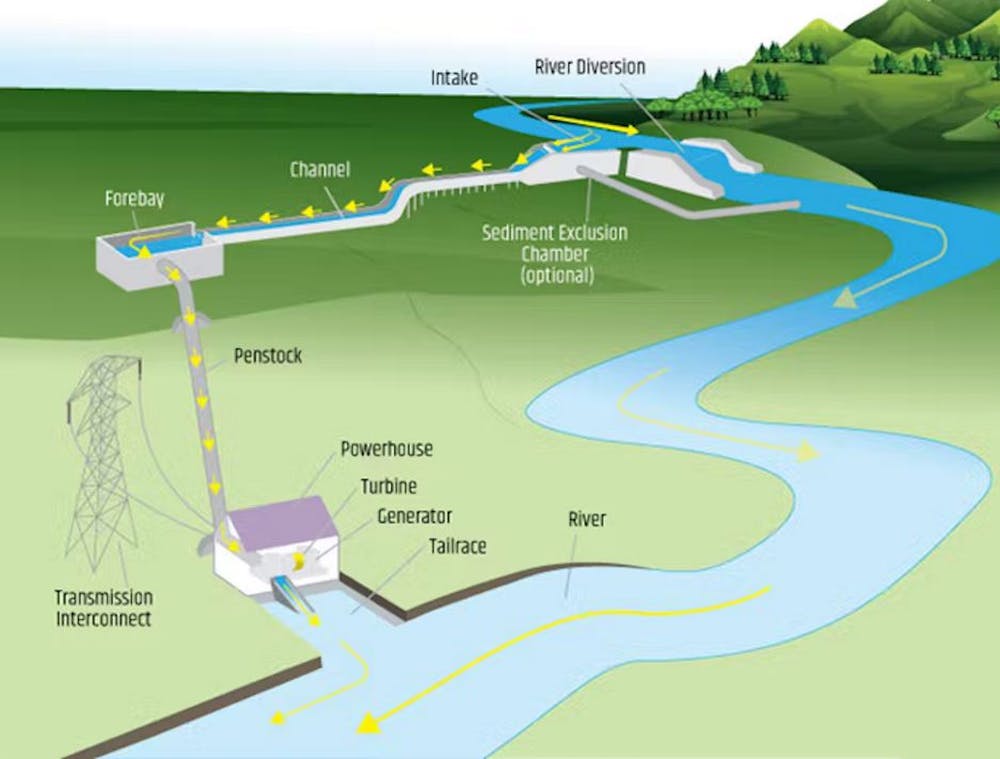
A run-of-the-river hydropower facility. U.S. Department of Energy
The second kind is called a “reservoir” or “dam” hydropower facility. These facilities use a dam to hold back the flow of a river and create an artificial lake behind the dam. Hydropower dams have intakes that control how much water flows through passages inside the dam. Turbines at the bottom of these passages convert the flowing water into electricity.
To produce electricity, the dam operator releases water from the artificial lake. This water speeds up as it falls down from the intakes near the top of the dam to the turbines near the bottom. The water that exits the turbines is released back into the river downstream. These reservoir hydropower facilities are usually large and can affect river habitats, but they can also produce a lot of electricity in a controllable manner.
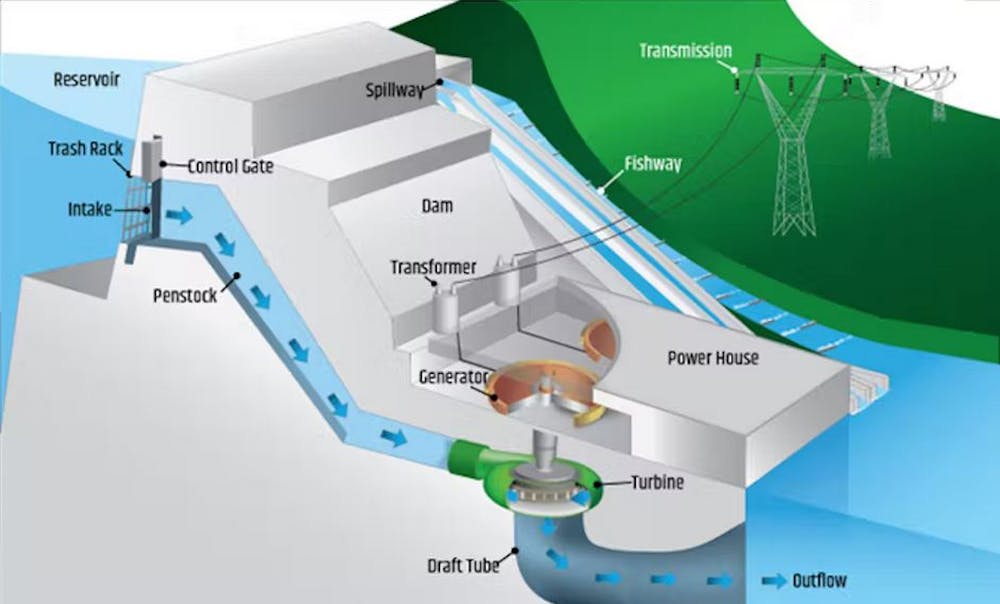
A dam-based hydropower facility. U.S. Department of Energy
The future of hydropower
Hydropower depends on the availability of water in flowing rivers. As climate change affects the water cycle, some regions may have less precipitation and consequently less hydropower generation.
Also, making electricity isn’t the only thing dam operators have to think about when they decide how much water to let through. They have to make sure to keep some water behind the dam for people to use and let enough water through to preserve the river habitat below the dam.
Hydropower can also play a role in limiting climate change because it is a form of renewable electricity. Hydropower facilities can increase and decrease their electricity production to fill in gaps in wind and solar generation.