


 Oil Prices Surge Above $106 After Deadly Saudi Airport Attack
  Gold Prices Mixed Ahead of US Inflation Data and Fed Rate Outlook
  Oil Prices Mixed as Russia Diesel Deal and Houthi Attacks Raise Supply Concerns
  China Bank Lending Rebounds in September, Beats Forecasts
  Asian Stocks Fall as Oil Prices Rise Ahead of US CPI Data
  Wall Street Ends Mixed as Investors Await CPI and Bank Earnings
  S&P 500 Rally Masks Losses for Over 40% of Stocks in 2026
  FxWirePro: Daily Commodity Tracker - 21st March, 2022
  S&P 500 Futures Rise Ahead of US Inflation Data and Bank Earnings


 Add as a preferred source on Google
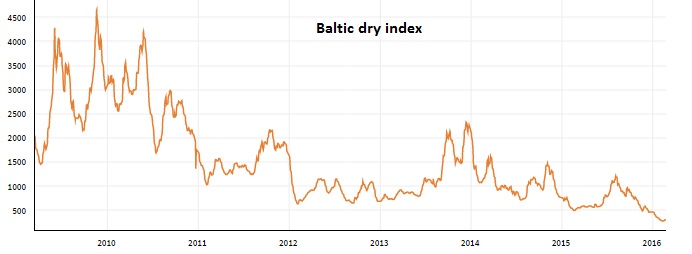
In our previous article under the series we discussed about the weakness in global trade that is likely to hinder global growth, citing World Trade Monitor report, which showed global trade contracted by -13.8% in 2015, in US Dollar terms, largest since great recession of 2008/09.
However that measure is with two month's lag and the next report would be published in summer during second quarter.
A more real time measure of global growth paint equally or even bleaker picture of trade into 2016.
Baltic Dry Index (BDI), which is a measure of shipping prices, to move bulk commodities from gains to iron ore dropped to their lowest level in history. This index is issued daily by London based Baltic exchange. Since its covers variety of ship size and shipping routes, is a good measure of cost of transferring major raw materials across seas.
BDI reached highest level during summer of 2008, to record high of 11793, before falling to 663 by December that year. After measures announced by FED and economy recovered from the slump the index reached 4500 level by late 2009. Compared to all that, in February it has dropped to just shy of 300 level and today, it is trading at 322. Since mid-2015, it has been declining steadily from above 1000.
This index at current level really looks scary and painting a real gloomy outlook for global trade.







