An EconoTimes perspective
Sharon Robinson
Professor, University of Wollongong
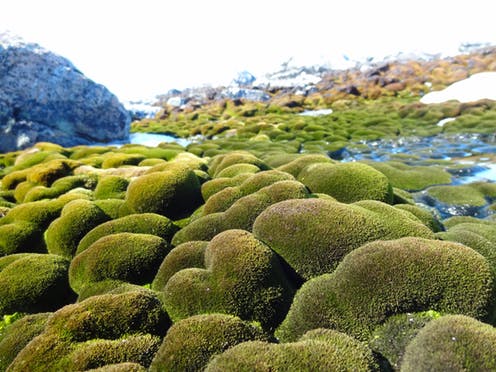
Professor, University of Wollongong 1990 PhD Plant Biochemistry, University College London 1986 Graduate Certificate in Science Education, Kings College London 1983 B.Sc. First Class Honours, University College London Sharon Robinson is a plant ecophysiologist and global change biologist with 27 years experience studying the fascinating world of “hot” and “cold” plants. Her current research ranges from determining how Antarctic plants respond to climate change, to understanding how and why certain plants heat their flowers and developing new ways of measuring plant performance in the field. Recent career highlights include determining that the radiocarbon bomb spike can be used to date Antarctic mosses – providing long-term growth records demonstrating that these are “old growth mosses” and providing enabling technologies to allow the effect of climate on these plants to be investigated for the first time. She has also developed a long term monitoring system for Antarctic vegetation that has provided the first evidence that climate change is affecting East Antarctic terrestrial communities. She is a Senior Professor in Global Change Biology at UOW and has visited Antarctica ten times since 1996. Editor, Global Change Biology United Nations Environment Programme -Environmental Effects Assessment Panel Global Challenge Program Leader, Sustaining Coastal and Marine Zones, University of Wollongong Homeward Bound Science Faculty UoW homepage: http://smah.uow.edu.au/biol/contacts/UOW009796.html