


 EU Weighs New Trade Restrictions on Israeli West Bank Settlements
  EU to Propose New Rules Limiting Children's Access to Social Media
  Iranian Missile Strike on UAE Oil Tankers Kills Indian Crew Member in Strait of Hormuz
  Reuters/Ipsos Poll: Most Americans Expect U.S.-Iran War to Be Prolonged
  Zelenskiy Plans Ukraine Government Shake-Up as Prime Minister Svyrydenko Set to Step Down
  Israeli Strikes Kill Six in Gaza as Ceasefire Talks Continue in Cairo
  Trump Administration Launches AI Cybersecurity Partnership to Protect Critical Infrastructure
  Russia Launches Missile and Drone Attacks on Kyiv, Zaporizhzhia, and Kharkiv
  Trump Says U.S. Strikes on Iran Will Continue Until Nuclear Deal Is Reached
  Trump Tells Congress Iran Hostilities Restarted, Citing New 60-Day War Powers Window
  Israel-Lebanon Talks Resume in Rome as Ceasefire and Troop Withdrawal Remain Elusive
  Trump to Deliver National Address on 2020 Election Intelligence, Voting Machine Security
  Israel Sets October 27 Election as Netanyahu Faces Tough Political Test
  Trump Administration Bars U.S. Travelers From Congo Flights Amid Ebola Outbreak
  Venezuela Appoints Felix Plasencia to Lead Foreign Relations and Trade
  Trump Recommends Darline Graham for Interim South Carolina Senate Seat


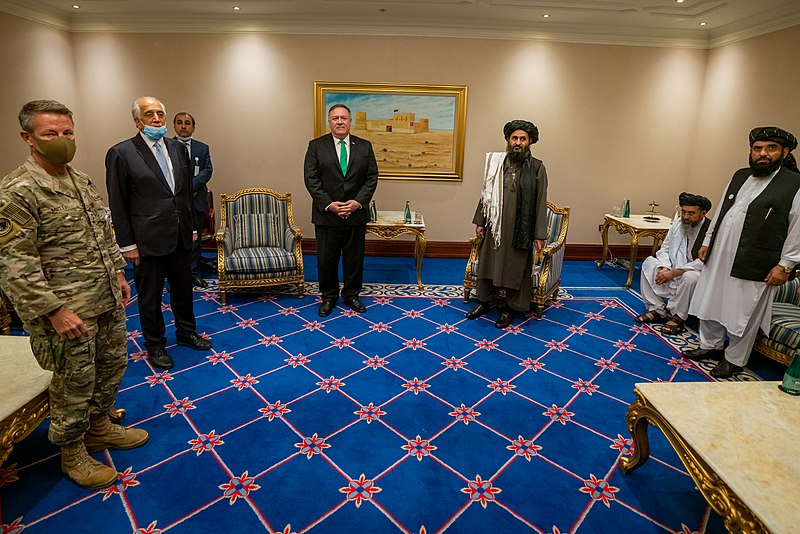
Afghanistan and the whole world are now reeling from the aftermath of the military evacuation made by the US and its allies upon the resurfacing of the Taliban. As the insurgent group seeks to form its own government, the Taliban has also announced its interim officials.
The Taliban announced Tuesday that the UN-sanctioned Taliban veteran Mullah Mohammad Hassan Akhund is to be the leader of Afghanistan’s new Taliban-ruled government. Taliban spokesperson Zabihullah Mujahid announced at a press conference that the group’s co-founder, Abdul Ghani Baradar would be the deputy leader. The rest of the officials Mujahid named are still in an acting capacity.
“The cabinet is not complete, it is just acting,” said Mujahid during the press conference at the Government Information and Media Center in Kabul. “We will try to take people from other parts of the country.”
Mullah Yaqub was named as the acting defense minister. Yaqub is the son of the late Taliban founder and Supreme Leader Mullah Omar. Haqqani network leader Sirajuddin Haqqani was also named as acting interior minister and Amir Khan Muttaqi, who was involved in the negotiations in Doha, Qatar, was named the acting foreign minister.
The insurgent group has been expected to announce its government after a rapid takeover of Afghanistan in the heels of the evacuations of the US and other allies. The Taliban has also looked to show a more moderate mindset, pledging to have a more inclusive government. However, it appears unlikely that there would be women appointed into government positions.
As the Taliban rapidly took control of Afghanistan, in the midst of evacuations, Afghan President Ashraf Ghani was revealed to have fled the country. This week, Ghani released a statement apologizing to the public for fleeing as well as explaining why he had to leave.
Ghani said in the statement that he had no choice but to leave, as his security team had advised him that if he should remain, there would be clashes in the streets similar to what was seen in Kabul during the 1990s. Ghani said that it was the most difficult decision he had to make, but in order to avoid more bloodshed, he had to leave.
However, Ghani also noted that he ultimately was unable to bring peace and stability to Afghanistan like his predecessors.







