


 Israel Approves West Bank Measures Expanding Settler Land Access
  Sanofi to Acquire Dynavax in $2.2 Billion Deal to Strengthen Vaccines Portfolio
  TrumpRx.gov Highlights GLP-1 Drug Discounts but Offers Limited Savings for Most Americans
  Ghislaine Maxwell to Invoke Fifth Amendment at House Oversight Committee Deposition
  India–U.S. Interim Trade Pact Cuts Auto Tariffs but Leaves Tesla Out
  Sanofi to Acquire Dynavax in $2.2 Billion Deal to Strengthen Vaccine Portfolio
  FDA Targets Hims & Hers Over $49 Weight-Loss Pill, Raising Legal and Safety Concerns
  Japan’s Prime Minister Sanae Takaichi Secures Historic Election Win, Shaking Markets and Regional Politics
  New York Legalizes Medical Aid in Dying for Terminally Ill Patients
  Anutin’s Bhumjaithai Party Wins Thai Election, Signals Shift Toward Political Stability
  Federal Appeals Court Blocks Trump-Era Hospital Drug Rebate Plan
  Trump’s Inflation Claims Clash With Voters’ Cost-of-Living Reality
  China Overturns Death Sentence of Canadian Robert Schellenberg, Signaling Thaw in Canada-China Relations
  Novo Nordisk and Eli Lilly Cut Obesity Drug Prices in China, Boosting Access to Wegovy and Mounjaro


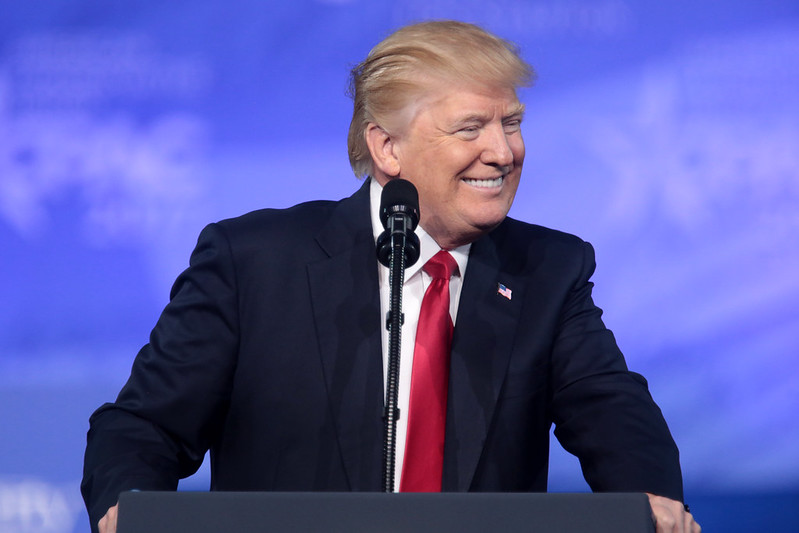
President Donald Trump recently made a post on social media saying that coronavirus numbers are decreasing “almost everywhere.” However, his claim is in contrast to an unreleased White House report showing that coronavirus infection rate is actually increasing in several metropolitan areas across the country.
“Coronavirus numbers are looking MUCH better, going down almost everywhere,” Donald Trump tweeted on Monday, according to CNBC News. “Big progress being made!”
However, undisclosed data from a May 7 coronavirus task force report suggest otherwise. Contrary to Donald Trump’s claim, coronavirus infection rates are on the rise in “several metropolitan areas and smaller communities across the country.”
The report said that infections rose by 72.4 percent or higher in a seven-day period for the top 10 areas with a noted spike in COVID-19 cases. At the top of the list is Central City, Kentucky, which posted a 650 percent surge in the number of confirmed coronavirus cases in a week’s time. The other areas mentioned are Amarillo in Texas, Nashville in Tennessee, and Des Moines in Iowa.
The report also identified several places labeled as “locations to watch,” which are probably areas where infections are likely to increase. The areas mentioned in the report include Columbus, Ohio; Kansas City, Missouri’ Charlotte, North Carolina; Omaha and Lincoln, Nebraska; Montgomery, Alabama; Nebraska, Minneapolis, and Phoenix.
Given the data, Columbia University National Center for Disaster Preparedness director Dr. Irwin Redlener pointed out that there is no downward trend contrary to what Trump has claimed. “Anybody that claims we're on a downward trajectory nationally is out of touch with reality,” Dr. Redlener said. He is also NBC News and MSNBC’s public health analyst.
Redlener also highlighted the possibility that coronavirus infection rates data are likely inaccurate given the low testing rates in the U.S. “There isn't a single state in the union that has sufficient testing,” he said.
“It's not appropriate to say the U.S. is consistently on a downward trend at all,” Dr. Redlener added. “In some places, it might be the direct opposite of that.”
Experts expect the coronavirus situation to worsen as some states start to open up their respective economies. For this reason, the Institute for Health Metrics and Evaluation at the University of Washington raised its death toll estimates due to the easing of social distancing measures.













