


 NASA's Artemis II Crew Arrives in Florida for Historic Moon Mission
  Trump Administration to Launch Autism Initiatives Targeting Acetaminophen Use and New Treatment Options
  NASA Artemis II: First Crewed Moon Mission Since Apollo Takes Four Astronauts on 10-Day Lunar Journey
  Trump and Merck KGaA Partner to Slash IVF Drug Costs and Expand Fertility Coverage
  Tabletop particle accelerator could transform medicine and materials science
  FDA Adds Fatal Risk Warning to J&J and Legend Biotech’s Carvykti Cancer Therapy
  Neuralink Expands Brain Implant Trials with 12 Global Patients
  Trump Signs Executive Order to Boost AI Research in Childhood Cancer
  Is space worth the cost? Accounting experts say its value can’t be found in spreadsheets
  Blue Origin New Glenn Rocket Explodes During Launch Pad Test, Delaying Space Ambitions


 Add as a preferred source on Google
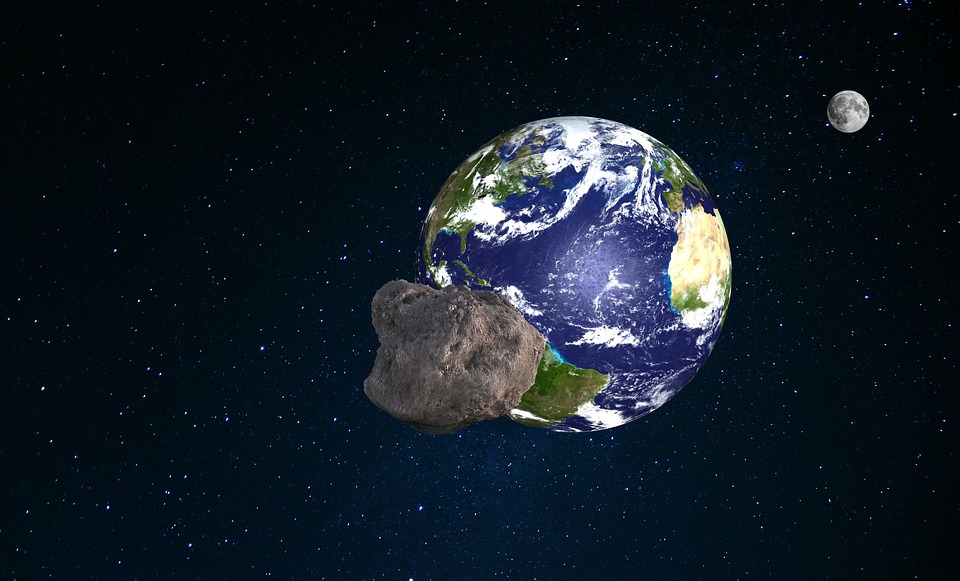
NASA’s asteroid trackers spotted an asteroid heading towards Earth at a rapid pace. Scientists predict that this asteroid will be arriving and passing by the planet later this week.
Express reports that asteroid 2012 XA133, named after the year it was first confirmed, is heading Earthbound at a speed of almost 53,000 miles per hour. The rock is on a close-approach trajectory and is predicted to fly past Earth on Friday, the 27th of March, being classified as a Near-Earth Object or NEO. XA133 measures between 590 feet and 1,279 feet in diameter, making it a relatively large rock.
Rocks with that size can likely cause a lot of damage should it collide with Earth. Asteroids that are much smaller will most likely burn up when it reaches the atmosphere. However, there are smaller asteroids that may slip past the agencies’ trackers undetected, such as the 2013 Chelyabinsk incident. Larger asteroids are considered as Potentially Hazardous Objects or PHOs and can cause damage on a global scale should it ever collide with Earth. But, experts have revealed that there is a very slim chance of this scenario actually happening.
Fortunately, when it finally approaches Earth, it will only fly by the planet and get as close as 0.04453 astronomical units. This is equivalent to 6.66 million kilometers, making it incredibly far away but still noticeable enough.
Meanwhile, along with asteroids, a new report reveals that a solar storm will be hitting Earth on Sunday, March 29th. Space forecasters predicted that the planet is in the crosshairs of solar wind. Solar particles escape the surface of the Sun on its southern hemisphere, resulting in a solar wind, which will now be headed to Earth all the way from the sun.
According to Space Weather, “A minor stream of solar wind is expected to hit Earth’s magnetic field on March 29th, possibly sparking Auroras around the Arctic circle. The gaseous material is flowing from a southern hole in the Sun’s atmosphere.”
Auroras is just one of the effects of solar storms. Solar storms can also affect satellite-based technology as well as expanding the Earth’s outer atmosphere.







