


 NASA Partners with Katalyst to Save Swift Observatory with Innovative Docking Mission
  Tabletop particle accelerator could transform medicine and materials science
  SpaceX Delays Starship V3 Launch Ahead of Potential Record IPO
  SpaceX Prioritizes Moon Mission Before Mars as Starship Development Accelerates
  SpaceX Pivots Toward Moon City as Musk Reframes Long-Term Space Vision
  China vs. NASA: The New Moon Race and What's at Stake by 2030
  Neuralink Expands Brain Implant Trials with 12 Global Patients
  FDA Pilot Program Eases Rules for Nicotine Pouch Makers
  Blue Origin New Glenn Explosion Could Delay Launch Operations Until 2028
  Cogent Biosciences Soars 120% on Breakthrough Phase 3 Results for Bezuclastinib in GIST Treatment
  Eli Lilly’s Inluriyo Gains FDA Approval for Advanced Breast Cancer Treatment


 Add as a preferred source on Google
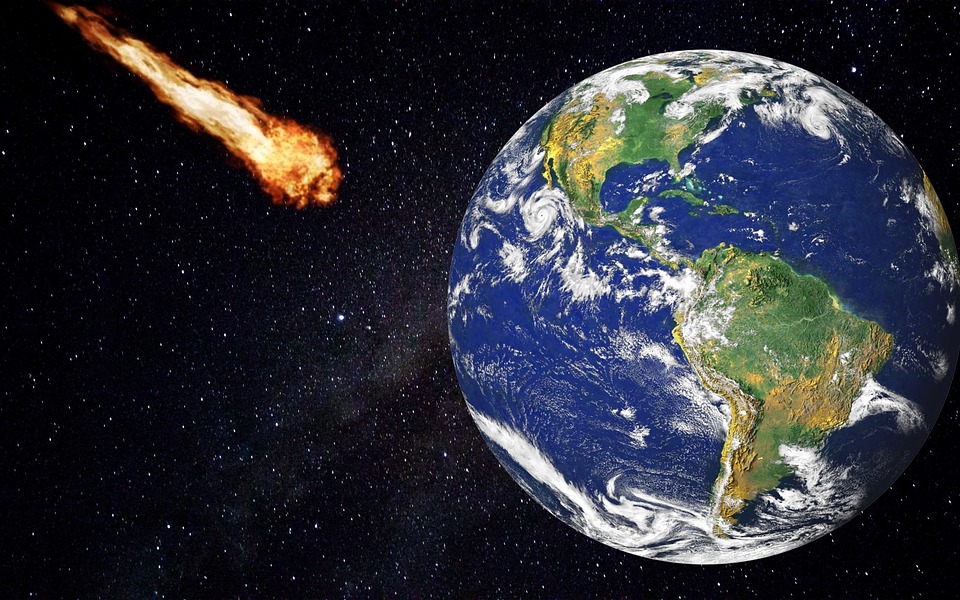
Astronomers have once again spotted a giant asteroid making its way towards Earth. NASA’s been keeping tabs on it, but the question is whether or not the asteroid would make an unannounced visit.
The agency’s asteroid trackers noticed a rock making its way to the Earth’s direction. Formally referring to it as 2020 AQ1, it was seen hurtling towards the planet at a speed of 27.51 kilometers per second. According to NASA, the asteroid measures somewhere between 328 feet to 754 feet in diameter. AQ1 is naturally classified as a Near-Earth Object or NEO and is said to approach the vicinity of the Earth by the 20th of January. How close the asteroid will get to the Earth has yet to be determined, but it is still near enough that space agencies in the world are taking notice of it.
Then again, if it is classified as a NEO, then it should be somewhere within the range of 1.3 astronomical units at the most. In human terms, it would still be millions of miles or kilometers away but its size is big enough to be seen in case it does come a little bit closer. With the many asteroids and comets approaching or passing by the Earth, scientists believe that at least one asteroid or comet will inevitably strike and cause an impact. It also bears mentioning that AQ1 is just one of the many asteroids that have been approaching Earth as of late. The European Space Agency or ESA, as of 7th January, have spotted 21,655 NEO asteroids and 109 NEO comets. Of all these asteroids, 996 of them are on the agency’s “risk list.”
Meanwhile, the first space race occurred all the way back in the 1950s between the United States and Russia. This time, a second Space Race seems to be occurring and more countries, as well as private institutions, are joining in the fray by conducting space missions of their own.
This second space race will also see China and the European Union try their hand in sending people into space to explore and better understand what lies beyond the Earth. They’re all preparing their own Mars Rovers as they hope to reach the Red Planet alongside established space powers like the United States and Russia.







