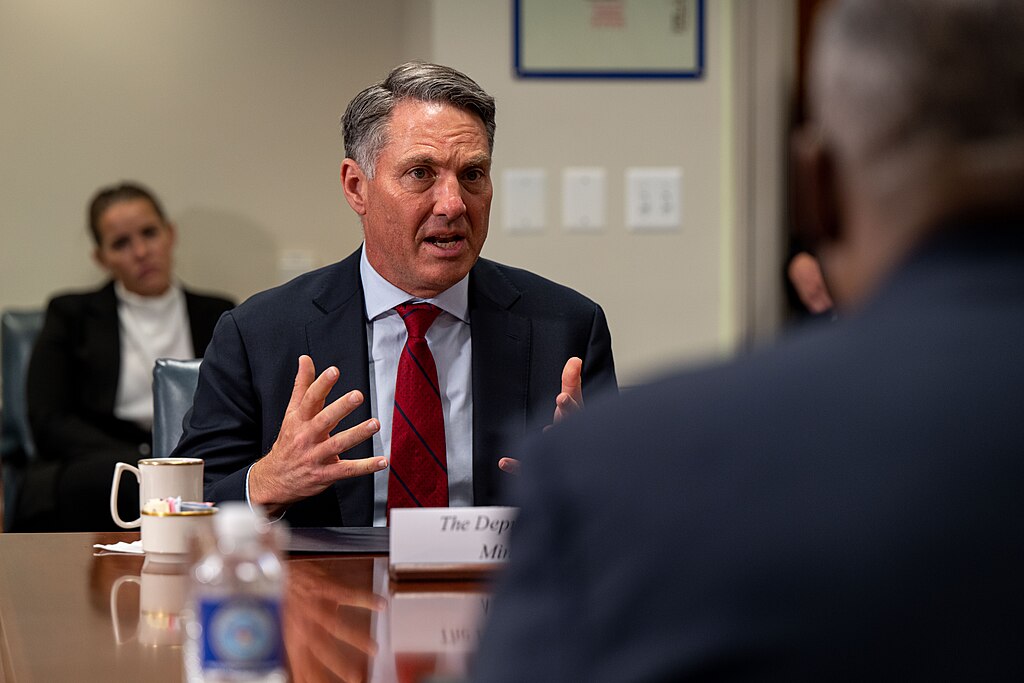
Australia is moving forward with the newly received United States review of the AUKUS nuclear-powered submarine partnership, signalling renewed confidence in the trilateral defence pact with the U.S. and the United Kingdom. Defence Minister Richard Marles confirmed that Canberra is “working through” the document and expressed appreciation to Washington for delivering the assessment. According to Marles, the U.S. remains “completely supportive of AUKUS,” a reassurance that strengthens the alliance’s long-term goals of enhancing security and regional stability.
The AUKUS partnership—Australia’s most ambitious and expensive defence initiative—will see the country invest about A$368 billion (US$240 billion) over the next three decades. The programme aims to equip Australia with advanced U.S. nuclear-powered submarines while boosting industrial cooperation and technological capability across all three member nations. Significant funding will also flow into the U.S. submarine production base, underscoring the scale and strategic depth of the agreement.
Concerns emerged earlier this year when former U.S. President Donald Trump’s administration launched a formal review of the pact, raising uncertainty in Canberra about the future of the submarine programme. Those tensions eased after Trump expressed his support for AUKUS during an October meeting with Australian Prime Minister Anthony Albanese at the White House. The review itself was led by Pentagon Under Secretary Elbridge Colby, who has previously warned that U.S. submarine production is under pressure due to high demand and capacity limitations.
In response to the complexity and scale of AUKUS, Australia announced a major reorganisation of its defence bureaucracy. A new Defence Delivery Agency will be created to improve oversight, accelerate project timelines, and ensure more effective defence spending. Reporting directly to ministers, the agency is expected to streamline management of Australia’s evolving military capabilities and reinforce its commitment to meeting AUKUS milestones.