


 Bank of America Predicts Yen Rebound as USD/JPY Faces Risks
  Trump Calls for Zelenskyy Replacement Amid Russian Diesel Deal
  Asian Currencies Steady as Dollar Eyes Fourth Weekly Gain
  US Dollar Hits 18-Month High as Fed Signals More Rate Hikes
  Wall Street Falls as Fed Minutes Signal Another Rate Hike
  Oil Prices Rise as Hormuz Risks Offset IEA Stock Release
  Gold Prices Fall as Fed Signals Another Rate Hike
  Deere, CNH and AGCO Stocks Fall as FTC Launches Farm Equipment Probe
  US Dollar Rises for Fourth Week as Fed Rate Hike Bets Grow
  Oil Prices Trim Gains After Trump Rules Out Iran Strikes Before Midterms


 Add as a preferred source on Google
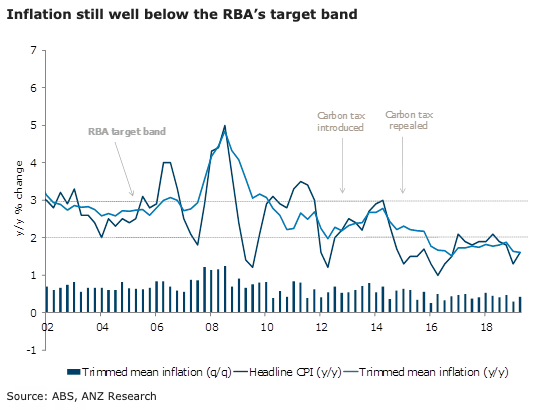
Australia’s headline inflation for the second quarter of this year rebounded after being flat in Q1. In annual terms, it increased to 1.6 percent (from 1.3 percent in Q1). The largest positive contributions for the quarter came from fuel prices rising 10.2 percent, international holiday travel and accommodation increasing by 2.7 percent and tobacco prices rising 2.4 percent.
Partly damping these increases were fruit and vegetables prices falling 2.8 percent and electricity prices coming off 1.7 percent.
Importantly, trimmed mean inflation, the measure of inflation most focused on by the RBA, increased 0.4 percent q/q. This saw the annual number unchanged at 1.6 percent. The RBA in its May SoMP forecast inflation to be 1.6 percent by June 2019.
So although 1.6 percent is below its inflation target, this print does not put pressure on the Bank to cut interest rates quickly again and allows it the room to see how future data play out.
Although trimmed mean inflation picked up this quarter, the ANZ Diffusion Index (which measures the proportion of the basket with annualised price rises of 2.5 percent or more) fell to 34 percent from 44 percent in Q1.
"The RBA’s forecasts to be published in the Statement on Monetary Policy next week will assume two further rate cuts (reflecting current market pricing). It is very difficult to see how the Bank will achieve its target of 4.5 percent unemployment in a timely manner without further easing. Consequently, we continue to expect another cut in the next few months, the exact timing of which we will firm up after next week’s RBA statement," ANZ Research commented in its latest report.







