


 Gold Prices Hit One-Week High as Oil Falls, Fed Rate Outlook Weighed
  Gold Prices Rise as Hormuz Tensions Fuel Inflation Risks
  Fed Minutes Signal Another Rate Hike by Year-End
  Deere, CNH and AGCO Stocks Fall as FTC Launches Farm Equipment Probe
  FxWirePro: Daily Commodity Tracker - 21st March, 2022
  Asian Currencies Steady as Dollar Eyes Fourth Weekly Gain
  Bangladesh GDP Growth Accelerates to 4.6% on Industrial Rebound
  Bank of America Predicts Yen Rebound as USD/JPY Faces Risks
  Dollar Near 18-Month High as Euro, Yen and Pound Weaken
  Gold Prices Rise as Dollar Weakens, Treasury Yields Fall
  France to Release 10 Million Barrels of Diesel to Ease Fuel Prices


 Add as a preferred source on Google
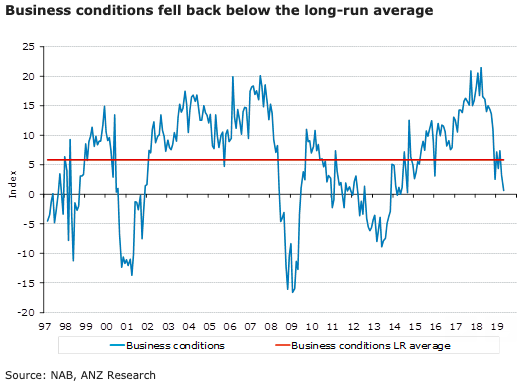
Australia’s business conditions for the month of May slumped to its weakest level since they briefly fell to almost zero in September 2014, although the confidence was up quite strongly during the period.
Business conditions fell to 0.6 in May. The sub-indices were mixed: profits, capacity use, and trading fell, while employment, exports, labour costs and purchases costs rose modestly. At 2, the employment index is consistent with modest jobs growth, while capacity use points to a sharply higher unemployment rate.
Conditions fell in New South Wales and Victoria to well below average levels, though the three-month moving averages are still around or close to average. Conditions also fell a touch in South Australia, though are still strong; and they remain above average in Tasmania – though well off recent highs. Conditions continued to deteriorate in Western Australia.
The change in conditions across industries was mixed. Mining fell, but remains elevated. Retail conditions deteriorated very sharply, to the weakest monthly level since March 2001. Transport was down by some margin, while the finance and recreational sectors fell a smaller amount. Manufacturing, construction and wholesale all rose somewhat.







