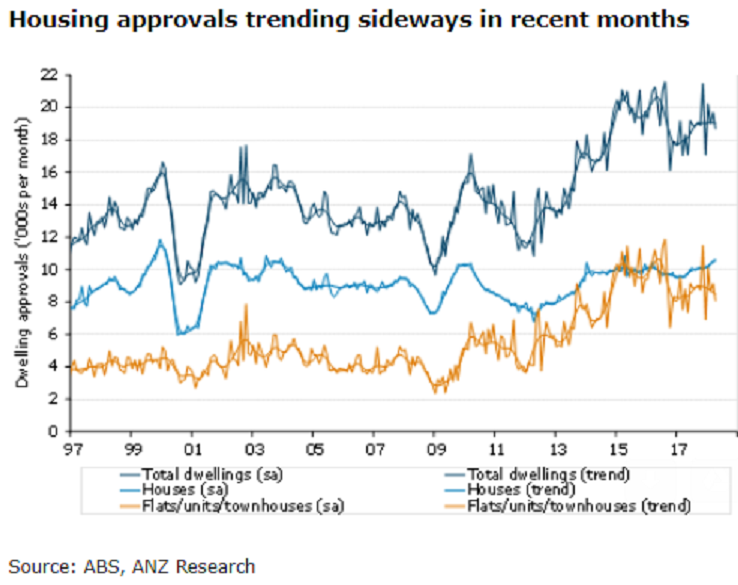
Australian residential building approvals fell broadly during the month of April, coming in worse than market expectations, thus offsetting the previous month’s rise.
As expected, the majority of the monthly decline was recorded in the ACT, where apartment approvals fell heavily (-85 percent) after the previous month’s strength. Elsewhere, the apartment sector recorded small gains in New South Wales and Queensland, while Victoria continues to trend lower from its record peak in November 2017.
Further, the housing finance indicator, suggests that markets are around the peak in the building approvals cycle. Housing finance for the construction and purchase of new dwellings has been trending lower for several months, suggesting that further upside to building approvals is unlikely. However, the volume of work already under construction will continue to support dwelling investment through 2018.
"We are more concerned about the decline in non-residential building approvals. Monthly approvals are now 20 percent lower than a year ago and are trending lower across most types of property (with the clear exception of accommodation). While the strength in approvals of offices and industrial property in 2017 suggests that activity should remain elevated in the near term, the recent downturn in approvals is challenging our outlook for ongoing strength in non-residential activity into 2019," ANZ Research commented in its latest report.
Lastly, FxWirePro has launched Absolute Return Managed Program. For more details, visit http://www.fxwirepro.com/invest