


 Best Gold Stocks to Buy Now: AABB, GOLD, GDX
  Gold Prices Fall as Fed Signals Another Rate Hike
  US-Led Coalition Targets Global Factory Overcapacity
  Oil Prices Slip as Trump Rules Out Iran Strike Before Midterms
  Crypto Market Selloff Wipes Out $100B as Bitcoin Falls Below $83K
  France to Release 10 Million Barrels of Diesel to Ease Fuel Prices
  FxWirePro: Daily Commodity Tracker - 21st March, 2022
  Gold Prices Rise as Dollar Weakens, Treasury Yields Fall


 Add as a preferred source on Google
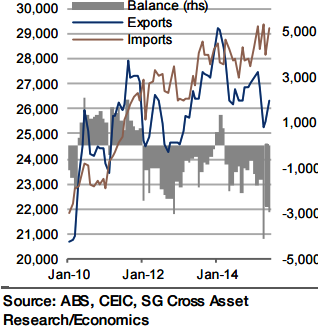
According to the official advanced estimate, imports were practically unchanged in July from June (0.2% mom), meaning that they remained at a high level, and were up by around 4.5% yoy. That said, all of this gain, and more, can be explained by the exchange rate, which in trade-weighted terms was down 13.5% yoy in July.
The volume of imports was estimated about flat over the past year, with the difference explained by weakness in commodity prices, specifically oil, of which Australia is a net importer. Exports, meanwhile, are expected to have continued their recovery after the 8.1% decline they suffered in March/April, but faced a serious headwind in July as the price of iron ore plummeted 17% from June (Port of Qingdao).
"Still, China's July figures for imports from Australia jumped to -4.5% yoy from - 26.5% in June, a move that can only partly be explained by a base effect. Overall, a muted 0.5% increase is expected in exports. As a consequence, the trade deficit should only improve fractionally", says Societe Generale.

- News

- Economy

- Central Banks
- Investing
- Research
- Roundups
- Digital Currency
- Insights
- Technical Analysis
- Technology
- Business
- Law
- Health
- Nature
- Fintech
- Science
- Topic
- Opinions
- ©Econometrics LLC . All Rights Reserved.
Australia's robust imports and weak export prices keep trade deficit elevated
Monday, August 31, 2015 6:09 AM UTC
Editor's Picks



- Market Data
Most Popular




