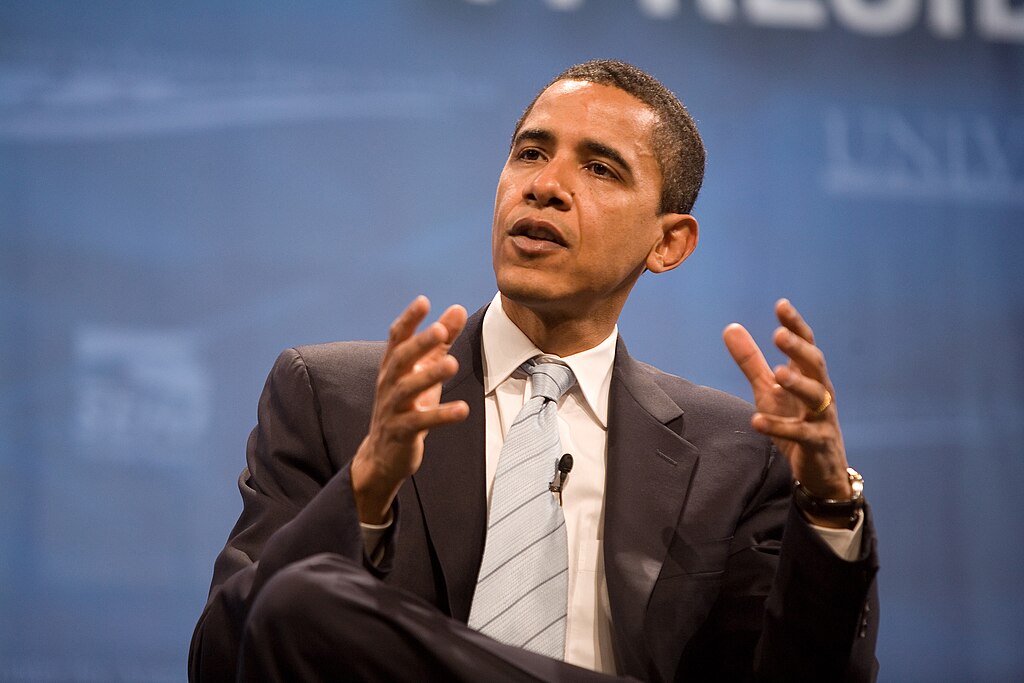
Former Presidents Barack Obama and Bill Clinton laid the groundwork at the Democratic National Convention, setting a trap that former President Donald Trump walked right into, according to political analysts. As the convention unfolded, it became clear that the Democrats had shifted their strategy, with Vice President Kamala Harris taking direct aim at Trump, labeling him "an unserious man."
CNN analyst Stephen Collinson has suggested that this was no accident. The speeches by Obama and Clinton in the days leading up to Harris’ address were designed to provoke a predictable response from Trump, one that would only reinforce Harris' critique. Their remarks ridiculed Trump, painting him as a figure of mockery, setting the stage for Harris to close the trap.
During her speech, Harris didn’t just attack Trump; she highlighted the grave consequences of his potential return to the White House, framing him as a threat to the nation’s stability. This shift in tone, according to Collinson, was calculated to draw Trump out, and it worked. As Harris spoke, Trump took to social media, firing off a series of frantic posts that seemed to validate her accusations.
In the analysis, Collinson emphasized that Trump's reaction was exactly what the Democratic strategists had hoped for. The real-time posts on Truth Social, combined with his subsequent speech, where he mocked the idea of sticking to policy over personality, only served to underscore Harris’ point. Trump’s response, rather than deflecting the criticism, played right into the narrative that the Democrats had been building throughout the convention.
This latest episode has raised concerns among some within Trump’s inner circle, who have been urging him to focus on policy rather than personal attacks. However, Trump has consistently shown a preference for engaging in the latter, much to the frustration of his advisors. Collinson pointed out that this strategy, while it may have worked in 2016, contributed to his challenges during his presidency, particularly in managing the COVID-19 pandemic, which many believe was a significant factor in his electoral defeat.
The concern among Trump's advisors is that he is once again allowing himself to be baited into a defensive position, rather than steering the conversation towards policy issues that could potentially resonate with undecided voters. The Democratic strategy, as executed by Obama, Clinton, and Harris, appears to have been to highlight Trump's weaknesses, not through direct confrontation, but by letting him expose them himself.
As Trump continues to react in real-time to the criticism from his political opponents, the question remains whether this approach will help or hinder his campaign. With the 2024 election cycle heating up, the battle between narrative control and reactive politics is becoming increasingly crucial. For now, it seems that the Democrats have successfully pushed Trump into a corner, forcing him to defend against charges of unseriousness and unpredictability.