


 FDA Pilot Program Eases Rules for Nicotine Pouch Makers
  SpaceX Delays Starship V3 Launch Ahead of Potential Record IPO
  SpaceX Pivots Toward Moon City as Musk Reframes Long-Term Space Vision
  NASA Cuts Boeing Starliner Missions as SpaceX Pulls Ahead
  Trump and Merck KGaA Partner to Slash IVF Drug Costs and Expand Fertility Coverage
  Trump Administration Releases New UFO Files and Apollo Mission Records
  NASA Artemis II: First Crewed Moon Mission Since Apollo Takes Four Astronauts on 10-Day Lunar Journey
  Tabletop particle accelerator could transform medicine and materials science
  Is space worth the cost? Accounting experts say its value can’t be found in spreadsheets
  Neuralink Plans High-Volume Brain Implant Production and Fully Automated Surgery by 2026
  Trump Administration to Launch Autism Initiatives Targeting Acetaminophen Use and New Treatment Options
  SpaceX Prioritizes Moon Mission Before Mars as Starship Development Accelerates


 Add as a preferred source on Google
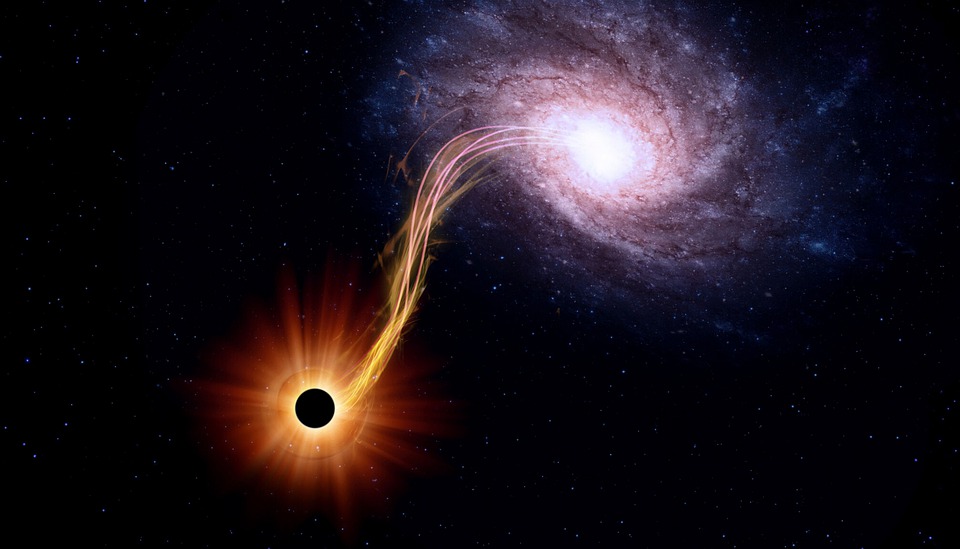
There have been many theories suggesting what could happen when the universe has reached its final or ultimate end or at least what would happen once the Sun dies out. One scientist, in particular, weighed in on the concern that the entire universe as we know it could collapse into itself, forming one supermassive black hole.
Dr. Joe Pesce, the director of the National Science Foundation, touched on the possibility of the entire universe getting sucked into a black hole. Answering questions in a Space.com Ask Me Anything, one user asked that given how black holes grow bigger the more it consumes material in the cosmos, would it then be possible for the universe to get sucked in as well. Dr. Pesce then assured the user that it was not possible.
“Black holes generally ‘feed’ slowly such that the added mass is a small percentage of the total mass. This is true for a stellar-sized black hole pulling mass from a nearby companion star, or a supermassive black hole consuming a star with up to two or three solar masses. If we had sensitive enough instruments we could measure that change, but I don’t believe we are quite there yet,” responded Dr. Pesce.
Due to the fact that the universe is expanding at a very fast rate, Dr. Pesce assured the user that it would not be possible for the universe to collapse into one supermassive black hole.
Astronomers have previously discovered several supermassive black holes that are billions of solar masses. It remains to be seen whether astronomers will be able to detect bigger black holes over time.
Previously, a 2019 study found that there are two black holes in the deeper reaches of space that emitted a flare that spanned throughout the universe. Researchers in the National Science Foundation’s Laser Interferometer Observatory found that these two black holes merged and created a strong beam of light. This is interesting considering that black holes, as its name implies, does not have light. Although it is likely that the beam of light came from the mergers, the researchers have yet to make sure if it was the case.







