


 NASA's Artemis II Crew Arrives in Florida for Historic Moon Mission
  Blue Origin New Glenn Rocket Explodes During Launch Pad Test, Delaying Space Ambitions
  China vs. NASA: The New Moon Race and What's at Stake by 2030
  Trump and Merck KGaA Partner to Slash IVF Drug Costs and Expand Fertility Coverage
  SpaceX’s Starship Completes 11th Test Flight, Paving Way for Moon and Mars Missions
  Is space worth the cost? Accounting experts say its value can’t be found in spreadsheets
  Neuralink Plans High-Volume Brain Implant Production and Fully Automated Surgery by 2026
  Trump Signs Executive Order to Boost AI Research in Childhood Cancer
  Trump Administration to Launch Autism Initiatives Targeting Acetaminophen Use and New Treatment Options
  FDA Adds Fatal Risk Warning to J&J and Legend Biotech’s Carvykti Cancer Therapy
  Trump Administration Releases New UFO Files and Apollo Mission Records
  SpaceX Delays Starship V3 Launch Ahead of Potential Record IPO


 Add as a preferred source on Google
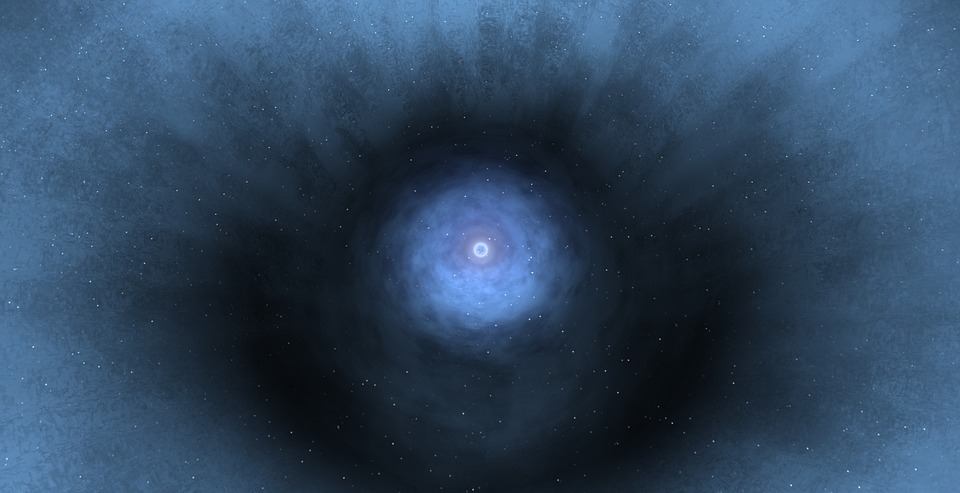
Black holes are among the most mysterious celestial objects to ever exist in the universe. Scientists have found not only another mysterious feature about the black hole, but a supermassive black hole that was first observed 10 years ago has a “heartbeat” that continues go to on today.
Express reports that the supermassive black hole, located 600 million light-years away from Earth, still has a mysterious “beat” to it since it was first observed over 10 years ago. This black hole and its “heartbeat” is thought to be the most-longlived heartbeat for a black hole by scientists. It was first observed back in 2007 in the middle of galaxy RE J1034+396 and the signal came in almost every hour. In 2018, the X-MNN Newton X-Ray satellites from the European Space Agency or ESA were able to rediscover the black hole, with the same rhythm going on ever since it was spotted for the first time.
The rhythm from the black hole also provides information on the size and structure of its event horizon - the part inside the black hole where nothing, even light, could escape from it. According to Durham University Center for Extragalactic Astronomy professor Chris Done, “The main idea for how this heartbeat is formed is that inner parts of the accretion disc are expanding and contracting. The only other system we know which seems to do the same thing is a 100,000 times smaller stellar-mass black hole in our Milky Way, fed by a binary companion star with correspondingly smaller luminosities and timescales.”
Previously, scientists at the University of California Los Angeles were surprised to find unusual objects near the supermassive black hole found in the middle of the Milky Way galaxy. The unusual objects in question look like gas but its behaviors are similar to that of stars and are both expanding and contracting due to the black hole’s gravitational pull.
The researchers that found these objects also noted that they have an orbital time of around 100 to 1,000 years. As of now, there are six of these objects, the first having been discovered in 2005 and referred to as G1, with the other five discovered and referred to as G2 to G6.







