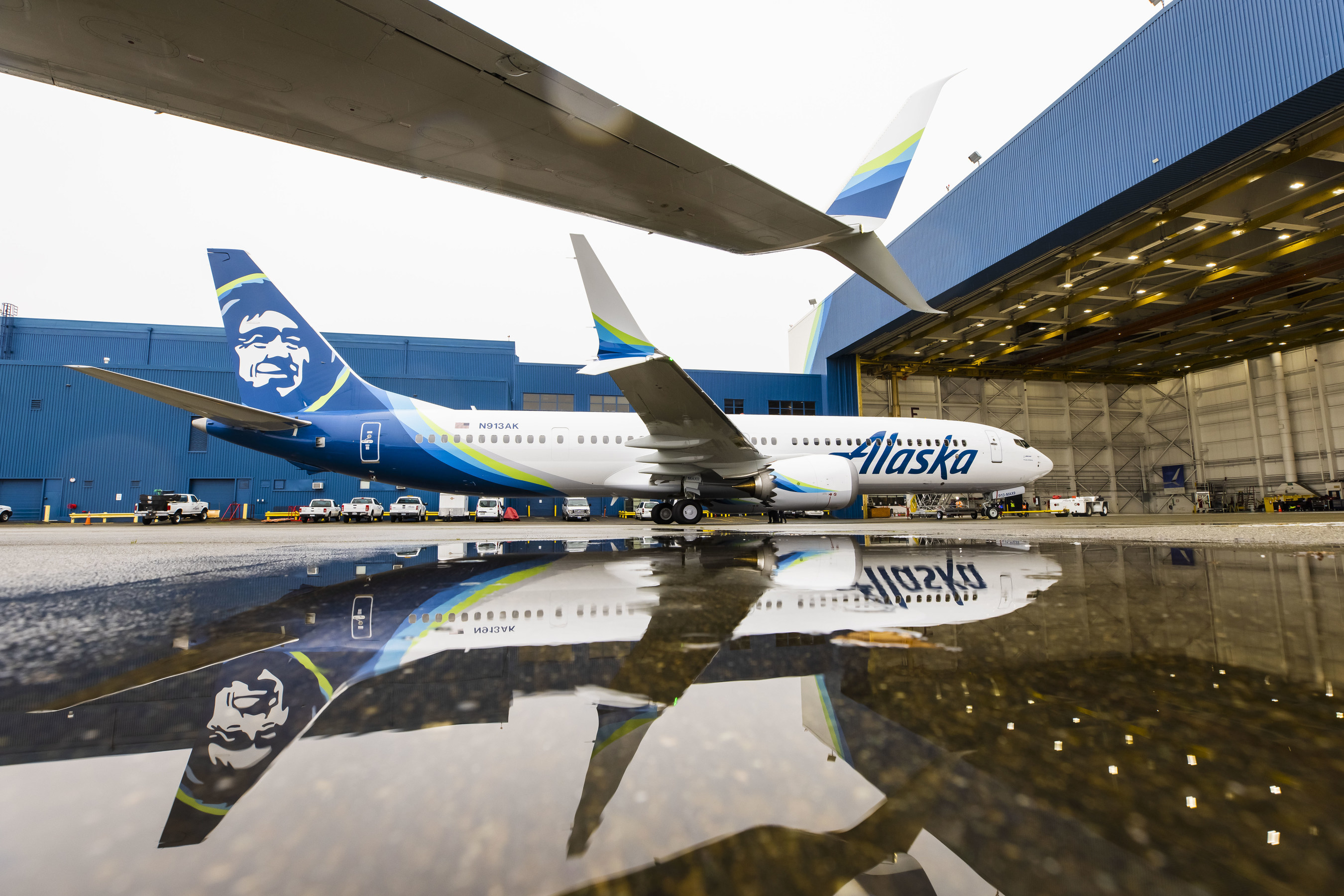
The recent mid-air blowout has thrust jet maker Boeing back into the regulatory spotlight at a critical juncture, just as it was on the verge of obtaining approval for new models of its best-selling MAX jet.
Reuters reported that investigators are still in the early stages of determining what caused a so-called door plug to detach from the side of an aircraft operated by Alaska Airlines on Friday with 171 passengers onboard.
According to CNN, the Federal Aviation Administration (FAA) has announced that all 171 Boeing MAX 9 airplanes will remain grounded until the agency is confident in their safe operation.
Mishap Compounds Existing Production Setbacks
This mishap further compounds the existing production setbacks that Boeing and supplier Spirit AeroSystems have been grappling with. These setbacks have hindered Boeing's recovery from a previous lengthy safety grounding of the 737 MAX and have been exacerbated by the wider disruption caused by the ongoing pandemic.
Meanwhile, Boeing's rival Airbus has experienced gains in market share since the two MAX crashes in 2018 and 2019, which resulted in nearly 350 fatalities and the grounding of the MAX worldwide for 20 months. The troubled history of the MAX has prompted significant reforms in U.S. airplane regulation throughout 2020.
Airlines increasingly seek to maximize passenger capacity in single-aisle aircraft, leveraging their improved performance, range, and cost-effectiveness. Having faced disappointing sales of its largest narrowbody, the MAX 9, Boeing was banking on its latest offering, the larger-capacity MAX 10, to compete with Airbus's dominating A321neo in the bustling market segment.
Boeing's Reluctance to Invest in New Plane
Brought by a debt of $39 billion, Boeing has been hesitant to invest in an all-new aircraft until engine technology matures in the next decade. However, delays in the certification process of the MAX 10, in particular, could place significant pressure on Boeing's strategy to bridge the gap throughout the 2020s, as analysts note.
Boeing's struggles have caught the attention of the Chinese market. Due to MAX safety concerns and trade tensions, this significant territory has been primarily closed to the jet maker in recent years. Chinese officials are closely monitoring the Alaska incident and seeking updates, illustrating the importance of the Chinese market to Boeing.
Due to these challenges, Boeing's shares have witnessed a decline of more than 40%, in stark contrast to Airbus's shares, which have risen by 25%.
FAA Considers Certification Exemption
The FAA is evaluating whether to grant an exemption allowing the MAX 7 to attain certification before Boeing completes the required design changes. However, industry experts suggest that the recent MAX 9 accident may tilt the scales toward rejecting the exemption.
Photo: Alaska Airlines Newsroom