


 Trump Secures Russian Diesel Deal as US Fuel Prices Surge
  Mike Rogers Calls for End to US-Canada Tariff War
  Gold Prices Rise as Dollar Weakens, Treasury Yields Fall
  Bangladesh GDP Growth Accelerates to 4.6% on Industrial Rebound
  US Dollar Hits 18-Month High as Fed Signals More Rate Hikes
  Iran Refuses to Halt Uranium Enrichment Amid US Nuclear Demands
  Asian Currencies Mixed as Yen Weakens, Dollar Holds Firm
  Fed Minutes Signal Another Rate Hike by Year-End
  Asian Stocks Mixed as OpenAI Revenue Concerns Hit Chipmakers


 Add as a preferred source on Google
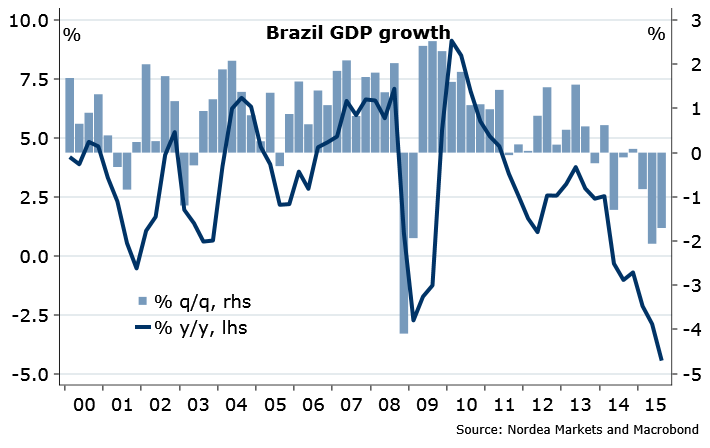
Growth continues to disappoint as the recession has deepened its grip on all sectors of the economy. Today's GDP prints for the third quarter showed economic activity contracted by a worse-than-expected -1.7% q/q in Q3, (vs consensus expectations of -1.2%). The Q2 number was revised lower to -2.1% q/q, (vs the earlier -1.9% print released in August).
The biggest drags on growth came from investments and private consumptions, while net exports continued to remain the only positive source of growth due to a weaker BRL.
"We expect investments and private consumption to continue to remain subdued in the quarters ahead as higher rates, the incipient weakening of the labour market, low confidence and worsened terms of trades are pulling the break on activity in these sectors",says Nordea Bank.
The lower than expected GDP print today and the downward revision of Q2 GDP growth lower the expectations for growth this and next year . Economic activity is likely to start recover on only a slow pace towards end 2016, and to pick up somewhat in 2017 as a stabilisation of commodity prices and monetary policy easing will help.
"We believe today's number will increase the pressure on the BRL and amplify the vulnerability of the currency. We expect weakening pressure on the BRL to persist in the near term as weak domestic fundamentals, risks of more rating downgrades, low commodity prices and the approaching Fed hike will keep it under pressure", added Nordea Bank.







