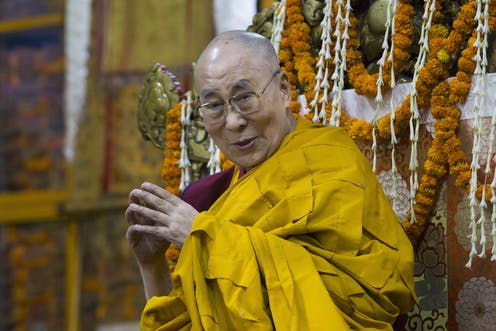
The Dalai Lama, spiritual leader of Tibetan Buddhism, turns 90 this Sunday. Revered worldwide for his peaceful advocacy, the 14th Dalai Lama—born Lhamo Dhondup in 1935 in Qinghai, China—was identified at age two as the reincarnation of Tibet’s spiritual leader. He fled to India in 1959 after a failed uprising against Chinese rule, establishing a government-in-exile in Dharamshala.
For over six decades, the Dalai Lama has championed Tibet’s autonomy through his “Middle Way” approach, seeking cultural and religious freedom rather than full independence. This earned him the 1989 Nobel Peace Prize and international admiration. His message of compassion, humility, and peace—“Be kind whenever possible. It is always possible”—has resonated globally.
Beijing, however, regards him as a separatist and has pressured other governments to avoid him. Despite health issues, including knee surgery and mobility challenges, the Dalai Lama remains active and expects to live to 110, based on a recurring dream.
As his 90th birthday nears, speculation intensifies over succession. In his recent book Voices for the Voiceless, he confirmed that Tibetans want the Dalai Lama institution to continue and stated any successor must be born in the “free world”—outside China. He has warned that any figure selected by Beijing will lack legitimacy. He has also previously said the next Dalai Lama could be female—or that there may be no successor at all.
Though he stepped down from political leadership in 2011, his spiritual and symbolic influence endures. As Tibet remains under Chinese control, the Dalai Lama’s future vision—and that of Tibetan identity—continues to draw global attention.