


 Neuralink Expands Brain Implant Trials with 12 Global Patients
  Cogent Biosciences Soars 120% on Breakthrough Phase 3 Results for Bezuclastinib in GIST Treatment
  SpaceX Prioritizes Moon Mission Before Mars as Starship Development Accelerates
  NASA Resumes Cygnus XL Cargo Docking with Space Station After Software Fix
  NASA Artemis II: First Crewed Moon Mission Since Apollo Takes Four Astronauts on 10-Day Lunar Journey
  Blue Origin’s New Glenn Achieves Breakthrough Success With First NASA Mission
  Is space worth the cost? Accounting experts say its value can’t be found in spreadsheets
  FDA Pilot Program Eases Rules for Nicotine Pouch Makers
  Blue Origin New Glenn Rocket Explodes During Launch Pad Test, Delaying Space Ambitions
  SpaceX’s Starship Completes 11th Test Flight, Paving Way for Moon and Mars Missions
  Trump Administration Releases New UFO Files and Apollo Mission Records


 Add as a preferred source on Google
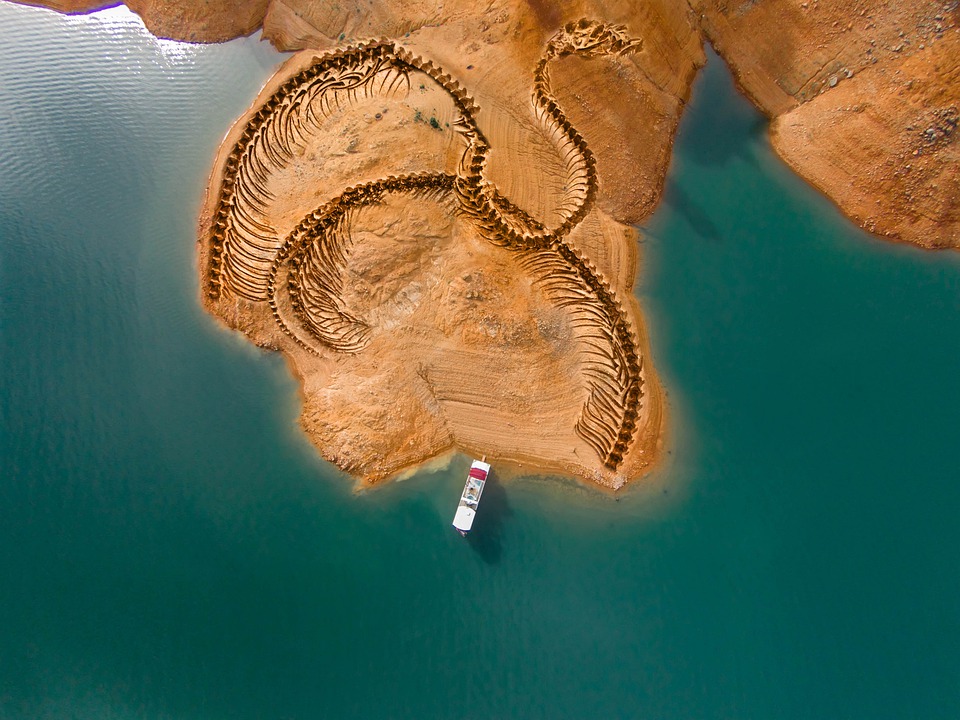
There is still so much to learn about the dinosaurs that once roamed the Earth. A recent breakthrough was able to shed more light on the spinosaurus, also known as the first known aquatic dinosaur.
Express reports that researchers in Morocco were able to discover more details as to how this 50-foot long aquatic dinosaur lived. Their findings were published in the journal Nature, and National Geographic science writer Michael Greshko also wrote a piece. Greshko described the Spinosaurus aegyptiacus had an evolving tail that was much longer than that of the adult tyrannosaurus rex and that five tables were needed in order to put together the bones that made up the tail.
“It’s so large, five tables are required to support its full length, and to my shock, the appendage resembles a giant, bony paddle. Delicate struts nearly two feet long jut from many of the vertebrae that make up the tail, giving it the profile of an oar. By the end of the tail, the tall, bony, bumps that help adjacent vertebrae interlock practically disappear, letting the tail’s tip undulate back and forth in a way that would propel the animal through water,” wrote Greshko.
According to the lead researcher, National Geographic’s Nizar Ibrahim, the Spinosaurus aegyptiacus was practically building its own tail, which would explain the constant evolution. This dinosaur was confirmed as semi-aquatic by 2014, but at the time, this theory was rejected by other scientists. This discovery would then provide further evidence that the spinosaurus was not only capable of staying on the shore, but it was also capable of moving through the water completely.
Aside from more information about the spinosaurus, paleontologists also discovered another species of the pterosaur. It was previously reported that researchers were able to discover the fourth species of the pterosaur in Morocco in Northern Africa. This would be the first dinosaur discovery made on African soil, as pterosaur fossils are mostly found in Europe, Brazil, and China.
This new species belongs to a pterosaur group called tapejarids. This species existed during the Cretaceous period around 140 million years ago, and alongside other species of dinosaurs, went extinct during the mass extinction caused by an asteroid collision 66 million years ago.







