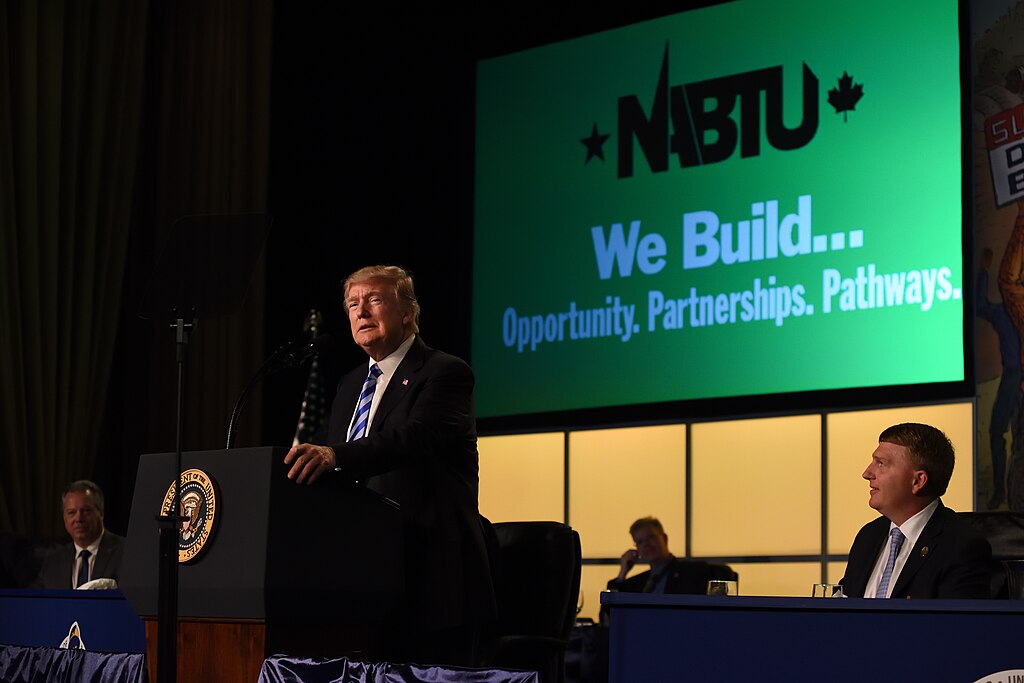
Former President Donald Trump made a bold promise to Muslim voters during a rally in Michigan, claiming that under his leadership, peace in the Middle East is inevitable. Speaking to a diverse crowd in Dearborn, home to one of the largest Muslim communities in the U.S., Trump outlined his foreign policy vision, asserting that his return to the White House would bring stability to the troubled region.
Trump’s Bold Middle East Peace Promise
“We’re going to get peace in the Middle East,” Trump proclaimed to an enthusiastic audience. “It’s going to happen, believe me!” This sweeping statement comes amid the backdrop of ongoing conflicts in the region, with many questioning the feasibility of such a goal. However, Trump insisted that his administration had laid the groundwork for peace, citing the historic Abraham Accords, which normalized relations between Israel and several Arab nations during his presidency.
Appeal to Muslim Voters
Trump’s message was aimed at securing support from Muslim voters, a demographic he struggled with in past elections. His promise of peace in the Middle East was an attempt to connect with voters concerned about U.S. foreign policy in the region. “We did more for peace in the Middle East than anyone else,” Trump said, claiming that his policies during his first term brought more stability than any other administration. He pointed to the Abraham Accords as evidence of progress, asserting that further diplomatic successes would follow under his leadership.
“We’re going to bring more countries together,” Trump added. “We were on the verge of something truly historic, but then Biden came in and messed it all up.”
Controversy and Criticism
Trump’s comments, however, were not without controversy. Critics argue that while the Abraham Accords were a diplomatic breakthrough, they did not address the Israeli-Palestinian conflict, which remains a core issue in the region. Trump did not shy away from addressing his detractors, stating that “peace takes time” and that his administration had made “incredible strides.”
Opponents also pointed out Trump’s travel ban on several Muslim-majority countries, which they argue alienated many Muslim voters. Despite this, Trump framed himself as a leader who would protect U.S. interests while working toward peace abroad. “We’re going to do things the right way,” he said, insisting that his administration would continue to pursue diplomatic solutions that benefit the U.S. and its allies.
Political Strategy
Trump’s rally in Michigan is part of a broader effort to regain momentum ahead of the 2024 presidential election. By reaching out to Muslim voters and focusing on Middle East peace, Trump aims to expand his base beyond the core supporters who backed him in previous elections.
Conclusion
While Trump’s promise to deliver peace in the Middle East garnered cheers from his supporters, the feasibility of such a claim remains hotly debated. With the Abraham Accords as his foundation, Trump hopes to convince voters that he is the leader capable of achieving lasting peace in the region.