


 Oil Prices Steady as Middle East Crude Flows Recover
  Fed Unveils Stablecoin Rules Under GENIUS Act
  India Manufacturing Growth Hits Seven-Month High in September
  BOJ Set for 25-Basis-Point Rate Hike as Yen Weakness Fuels Inflation
  Gold Prices Slip as High Treasury Yields Weigh on Bullion
  US Treasury Bond Buybacks Fall Short Despite Expanded $6 Billion Cap
  Gold Steady as Softer U.S. Inflation Eases Fed Rate Hike Bets
  RBA Hikes Interest Rate to 4.60% as Inflation Risks Rise
  ECB May Stop Rate Hikes After December, Capital Economics Says
  US Alcohol Ban Exposes Canada’s Internal Trade Barriers
  Asian Stocks Rise as Bond Yields Ease Ahead of U.S. Inflation Data
  Asian Stocks Fall as Bond Yields and Oil Prices Surge


 Add as a preferred source on Google
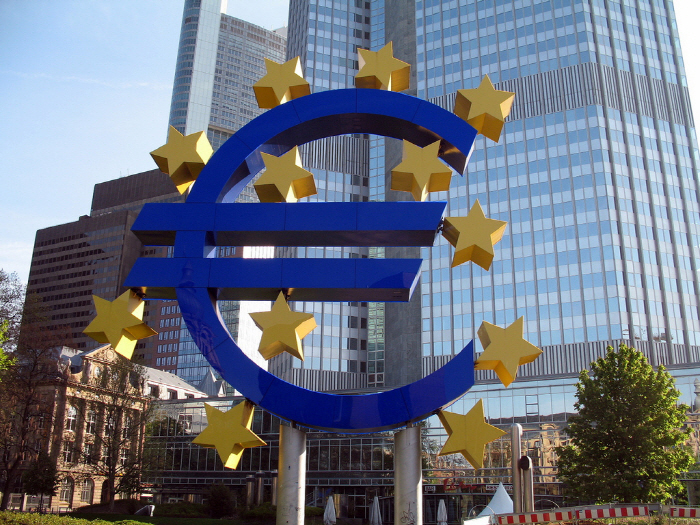
The European Central Bank’s (ECB) single interest rate has long drawn criticism for ignoring economic disparities within the eurozone. In the 2000s, the “one size fits all” approach led to stark imbalances—fueling a boom in Spain while Germany stagnated. Cheap capital flowed to southern economies, inflating property bubbles and debt. The 2008 global financial crisis exposed these vulnerabilities, hitting the periphery hardest.
A similar pattern emerged in the 2010s. Southern countries struggled through recessions while the ECB’s unified rate better suited stronger northern economies, prolonging economic divergence.
However, recent developments suggest a shift. From Q4 2022 to Q1 2025, Spain’s economy grew 6.3% while Germany’s contracted. According to Capital Economics, inflation and output gaps across Germany, France, Italy, and Spain are now more closely aligned than at any point in recent decades.
Using the Taylor Rule—which calculates optimal interest rates based on inflation, output gaps, and a steady-state real rate (assumed at 0.5%)—analysts found similar recommended rates across major eurozone economies. This convergence reflects shared shocks such as the Covid-19 pandemic and energy crisis, which impacted all member states in parallel.
Crucially, the imbalances that once divided the bloc have eased. There are fewer signs of excessive credit growth or property bubbles, and fiscal policies are currently less divergent.
Still, risks remain. Spain’s rapid growth and low unemployment may soon push core inflation higher, potentially demanding tighter monetary policy. Conversely, France’s high deficits may necessitate fiscal tightening and lower rates. Germany may move toward fiscal loosening, justifying the opposite.
While recent alignment supports the ECB’s unified policy, future divergence could once again challenge its effectiveness in managing the eurozone’s complex economic landscape.







