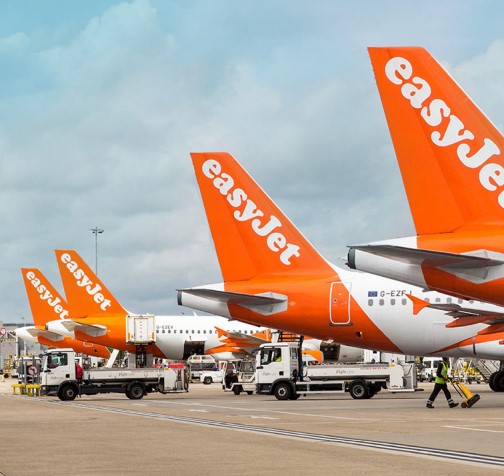
UK's EasyJet revealed that its first-ever annual loss could reach $1.1 billion as it was operating at just 25 percent of its capacity.
Analysts had expected it to lose $1 billion.
EasyJet said continued travel restrictions would allow it to fly just 25 percent of its capacity for the rest of 2020, behind rival Ryanair, which is aiming for 40 percent in October.
The airline has notified the UK government that it may need more financial assistance, which CEO Johan Lundgren described as a “step up with a bespoke package of measures.”
Founded in 1995, EasyJet has never made a full-year loss.
So far, EasyJet has taken a $776 million loan from the government, cut 4,500 jobs, sold aircraft to raise $786 million, and tapped shareholders for $542 million.



TetherMax Rebranding Highlights Official Exchange Partnerships as Foundation of Trust
SoftBank’s LY Corp, Bain Raise Kakaku.com Bid to ¥670 Billion, Intensifying Takeover Battle
EU Chip Industry Faces Growing Risks From China Export Controls and U.S. Technology Dependence: Report
OpenAI Proposes 5% U.S. Government Stake Amid AI Policy Talks
Chinese Copper Foil Maker Londian Files U.S. IPO as EV Battery Demand Grows
easyJet Agrees in Principle to £5.23 Billion Castlelake Takeover Offer
Samsung to Invest $90 Billion in South Korea to Expand AI Chip, Display, and Battery Production
Kuaishou Stock Jumps as Kling AI Secures $2 Billion Funding Round
Meta Cloud Ambitions Could Challenge AWS, Azure, and Google Cloud, Says Morgan Stanley
Anthropic Tightens AI Access Controls After Reports of China-Based Workarounds
Foxconn Q2 Revenue Surges Nearly 40% on Strong AI Server Demand
Texas Man Charged After Fatal Tesla Full Self-Driving Crash in Katy
Suncorp Cuts 2026 Premium Growth Forecast as Australia, New Zealand Markets Weaken
Citi Raises TSMC Price Target as AI Chip Demand Strengthens Growth Outlook
Norway Offshore Oil Workers Reach Wage Deal, Averting Strike
Lockheed Martin Emerges as Frontrunner to Acquire Ultra Maritime in $3.5 Billion Defense Deal
Meta CEO Zuckerberg Says AI Agent Development Has Slowed Despite Massive AI Investment 


