
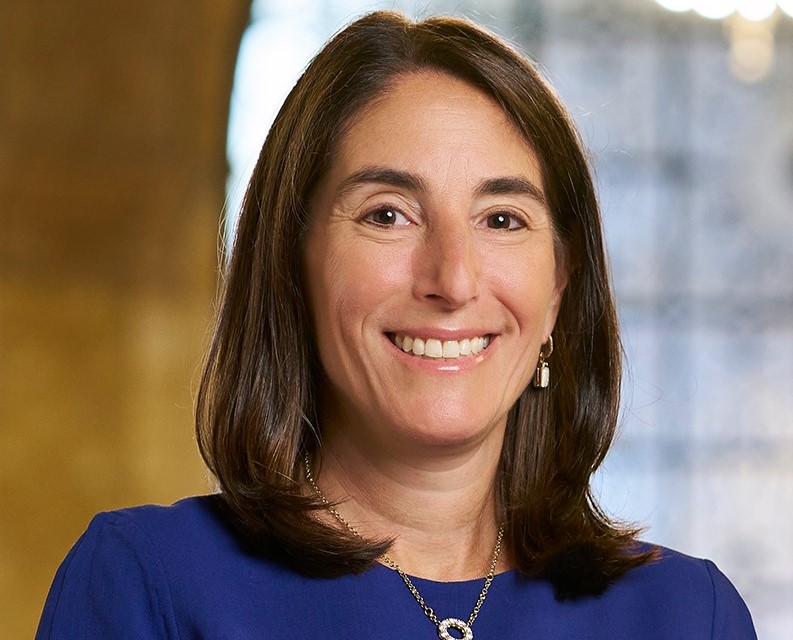
Cleveland Federal Reserve President Beth Hammack emphasized that the Fed needs more time to assess the impact of U.S. President Donald Trump’s tariffs and broader policy agenda before adjusting monetary policy. Speaking at Stanford University’s Hoover Institution, Hammack noted the uncertainty surrounding trade policies, deregulation, and fiscal measures, which complicates the Fed’s decision-making process.
Despite a 0.3% annualized contraction in the U.S. economy last quarter, Hammack argued that it’s too early to draw conclusions due to data distortions caused by trade volatility. “It is all premature… we need to really wait and see how the data play out,” she said, highlighting the need for clear and convincing evidence before any rate moves.
The Federal Reserve left interest rates unchanged this week, maintaining the 4.25%-4.50% range. Fed Chair Jerome Powell acknowledged the risks tariffs pose, such as raising inflation or increasing unemployment, but noted the lack of clarity around the extent and timing of these effects.
Hammack added that while the labor market remains strong—with unemployment at 4.2%—businesses are preparing for potential workforce reductions if demand slows. Still, many firms are retaining workers due to past hiring difficulties.
Inflation remains a concern. While tariffs may cause one-time price hikes, some companies are planning gradual increases as tariff levels become clearer, potentially extending price pressures into the summer. This prolonged uncertainty raises the risk of entrenched inflation, which could prompt tighter Fed policy.
Given the mixed signals, Hammack supports holding policy steady. “Taking no action is the best choice right now,” she said, urging a holistic view of economic forces. The Fed, she added, must weigh competing risks carefully as it navigates this fluid environment.


