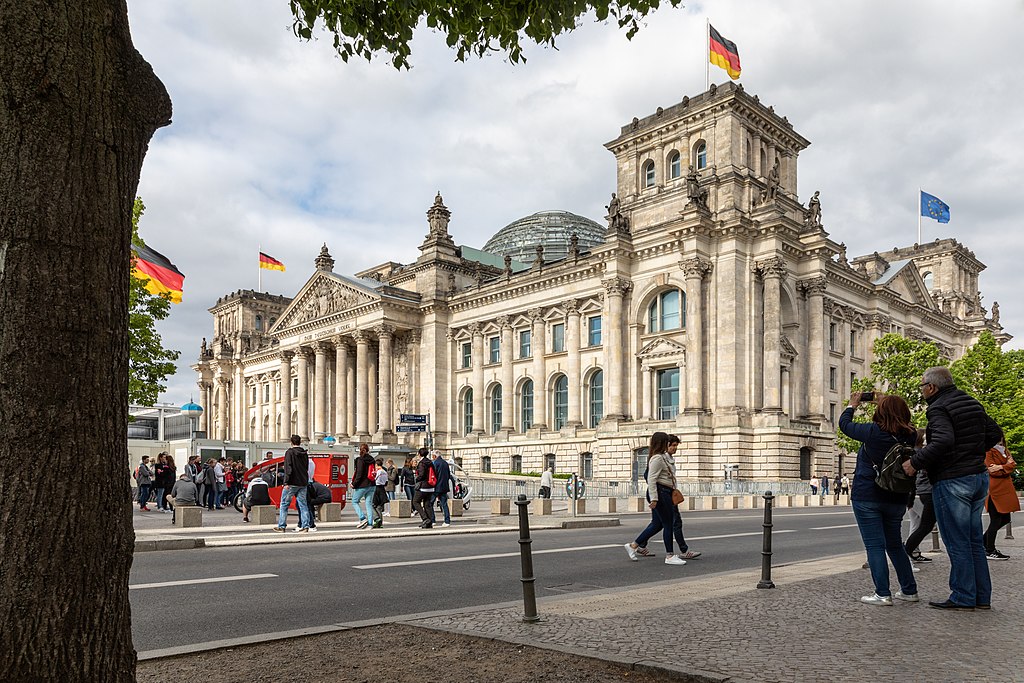
Germany’s economic outlook remains cautious, with a new forecast from the German Economic Institute (IW) indicating only modest improvement in 2025 as global trade falters and domestic financial pressures intensify. According to figures shared with Reuters, Germany’s real GDP is expected to inch up by just 0.1% in 2024 after two consecutive years of contraction. Growth is projected to accelerate to 0.9% in 2025, though IW notes that roughly one-third of this increase stems from a calendar effect that adds nearly two and a half additional working days compared to the year prior.
IW chief economist Michael Groemling said the country is “emerging somewhat from its state of shock,” but lingering challenges continue to weigh on the recovery. Export demand remains weak due to slowing global trade and heightened geopolitical tensions, including the impact of U.S. tariff policies. After an anticipated 4.5% increase in 2025, world trade growth is expected to cool sharply to just 1.5% in 2026, further straining Germany’s export-driven economy.
Fiscal pressures are also mounting. IW forecasts that taxes and social contributions will rise to a record 41.5% of GDP in 2025, up from 40.2% the previous year. Higher defense spending, infrastructure investments, and expanding social obligations—such as pensions and health insurance—are driving this increase. Germany’s debt-to-GDP ratio is projected to climb to 66%, while the government’s share of economic output will surpass 50%.
Investment activity will remain subdued, with private sector investment hampered by foreign trade uncertainty and government investment plans not expected to advance significantly. Still, combined private and public investment may contribute about half a percentage point to growth in 2026.
Despite inflation stabilizing near 2%, consumer spending is unlikely to fully recover as employment prospects remain weak. Unemployment is expected to hover around 3 million, and job losses in the industrial sector are likely to continue, reinforcing a muted outlook for Europe’s largest economy.