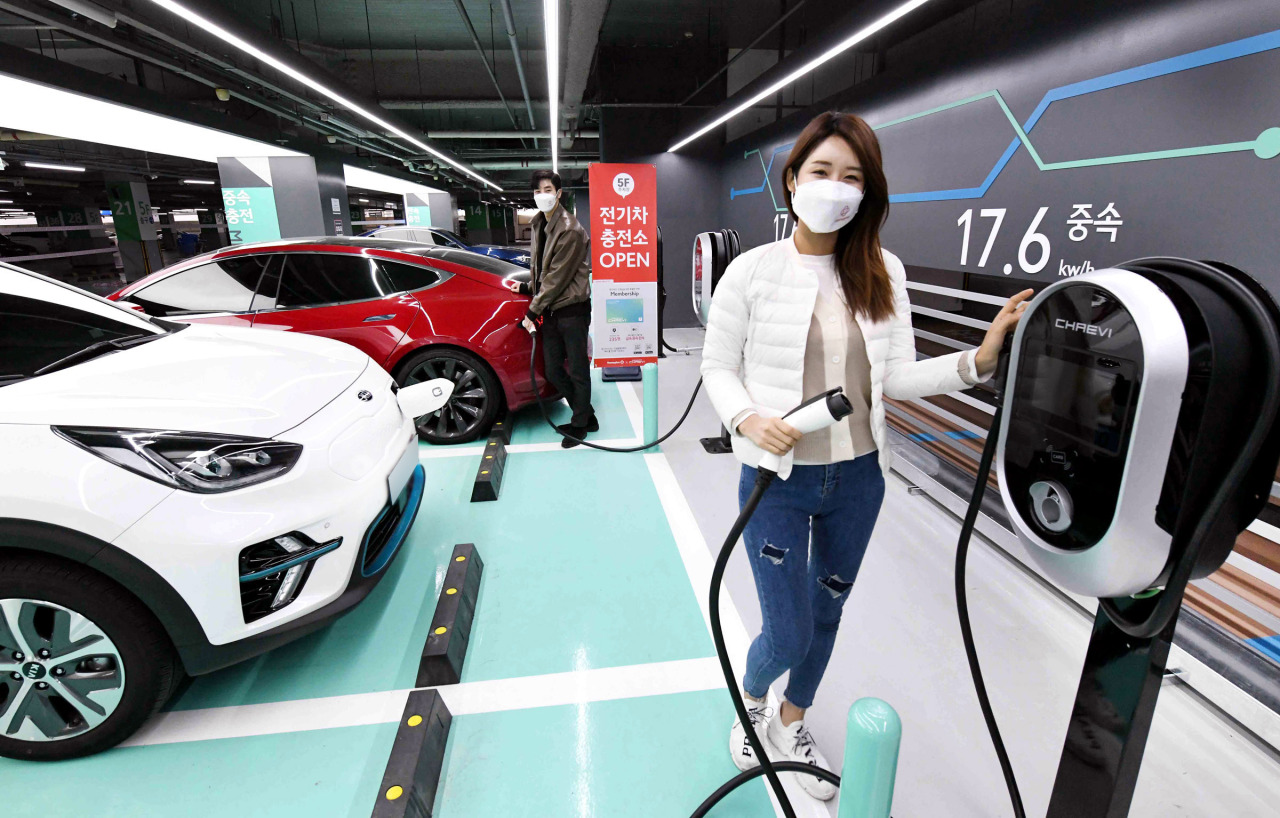
The Korea Agency for Technology and Standards revised its EV charger technology standards to simplify the certification process while streamlining manufacturers’ registration requirements to promote development and installation.
The revision makes it easier for businesses to obtain the certification they need to change auxiliary electronic equipment like displays, modems, and payment devices, whose specifications are frequently revised depending on the end-user type.
Minor adjustments to the external design and terminal block are also now feasible without the need for approval.
When it comes to changes in cable length, which has been a source of great frustration for manufacturers, the agency intends to allow companies to freely customize it without requiring additional approval.
However, it has to stay within the range of the maximum and minimum lengths accepted during the initial approval procedure.
Additionally, the calibration unit for indicating the charging amount per kilowatt-hour will be changed from 0.1 to 0.01 to provide consumers with more accurate charging price information.