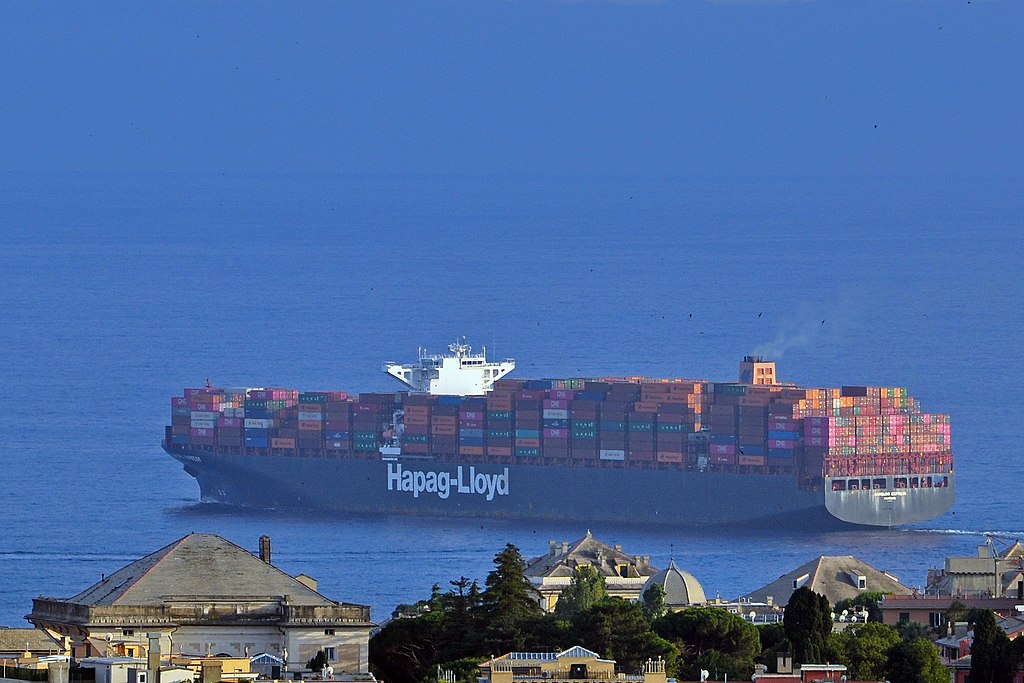
Hapag-Lloyd AG (ETR:HLAG) reported strong first-quarter results, reaffirming its full-year outlook despite ongoing global trade tensions and continued instability in the Red Sea. Shares of the German container shipping giant jumped nearly 6% following the announcement.
The world’s fifth-largest carrier by capacity posted Q1 EBITDA of €1.01 billion ($1.13 billion), up from €835 million a year earlier and in line with its guidance. EBIT reached €462.8 million, just shy of its €500 million forecast. Revenue rose 19% year-over-year to €5.05 billion, supported by a nearly 9% increase in both shipping volumes and average freight rates. The growth was largely driven by exporters in China and U.S. importers rushing shipments ahead of anticipated tariff changes.
CEO Rolf Habben Jansen reaffirmed the company’s focus on Strategy 2030 and cost reduction, aiming to save over $1 billion in the next 18 months. However, he warned of “considerable uncertainty” due to geopolitical risks and volatile trade dynamics.
Hapag-Lloyd maintained its full-year forecast of group EBITDA between €2.4 billion and €3.9 billion, and EBIT between €0 and €1.5 billion. The company emphasized that its outlook remains sensitive to freight rate fluctuations and unresolved geopolitical tensions.
Despite recent tariff relief—such as the U.S. lowering base tariffs on Chinese goods from 145% to 30%, and reciprocal reductions by China—Hapag-Lloyd noted that Red Sea disruptions persist and new U.S. tariffs are dampening short-term demand.
Deutsche Bank upgraded Hapag-Lloyd and Maersk to Hold from Sell, citing potential short-term freight rate gains as China-U.S. trade activity rebounds and inventories are restocked. However, it maintained a cautious long-term outlook on the sector due to ongoing overcapacity.