The ECB's exposure to Greece is not huge and ultimately lies with the euro-zone governments that would have to recapitalise it. But a Greek default to the ECB would be a serious blow to the Bank's credibility that could …
The ECB's exposure to Greece is not huge and ultimately lies with the euro-zone governments that would have to recapitalise it. But a Greek default to the ECB would be a serious blow to the Bank's credibility that could limit its ability to control inflation or support stressed bond markets in future.
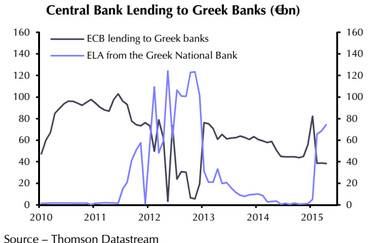
The ECB is exposed to a Greek default through two direct channels. Its holdings of Greek government bonds purchased during the Securities Markets Programme (SMP) have a book value of €18bn, or 0.2% of euro-zone GDP. Chart shows that €6.7bn worth matures this summer. And its lending to Greek banks through refinancing operations was €38.5bn (0.4% of GDP) in April. So in the event of a sovereign default and associated collapse of the banking sector, the ECB could suffer losses of up to €56.5bn, wiping out its subscribed capital of €10.8bn, but not its total capital and reserves of €96bn, notes Capital Economics.
Federal Reserve Bank of New York President John Williams said Tuesday that he continues to support one additional interest rate hike in 2026 but does not anticipate further increases in 2027, citing expectations that inf…
Visa Inc. (NYSE: V) has secured approval from China's central bank to begin preparations for establishing a domestic bankcard clearing institution, marking a significant milestone in the U.S. payments giant's efforts to …