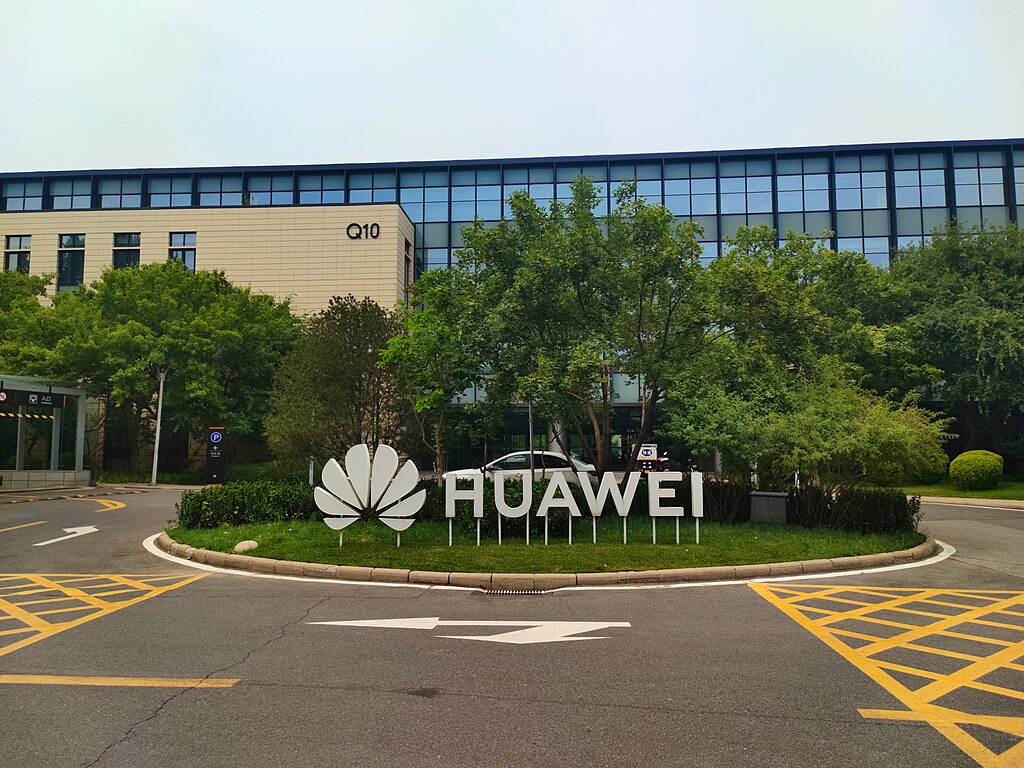
Huawei Technologies has introduced its most advanced AI computing system, the CloudMatrix 384, at the World Artificial Intelligence Conference (WAIC) in Shanghai, intensifying competition with U.S. rival Nvidia (NASDAQ: NVDA) in China’s rapidly growing AI market.
The CloudMatrix 384, which debuted publicly at the three-day event, features 384 of Huawei’s Ascend 910C chips and is designed to rival Nvidia’s GB200 NVL72 system, which uses 72 B200 chips. According to semiconductor research group SemiAnalysis, Huawei’s system surpasses Nvidia’s on certain performance metrics by leveraging innovative system-level architecture rather than relying solely on individual chip power.
Huawei employs a “supernode” interconnect design that enables high-speed communication among chips, compensating for performance gaps and allowing the system to scale efficiently. Industry analysts suggest this positions Huawei as China’s strongest domestic alternative to U.S. suppliers, particularly amid ongoing U.S. export restrictions on advanced chips.
Nvidia CEO Jensen Huang previously acknowledged Huawei’s rapid progress, citing the CloudMatrix system as evidence of its momentum. While Huawei staff at WAIC declined to comment on specifications, the company confirmed the system is already operational on Huawei Cloud, signaling its readiness for enterprise AI workloads.
The launch reflects China’s push to secure self-reliant AI infrastructure and reduce dependence on foreign technologies as global demand for high-performance computing surges. Analysts say the CloudMatrix 384 could play a pivotal role in China’s AI ambitions, from generative AI to industrial applications, as Huawei continues to expand its cloud and semiconductor ecosystem despite geopolitical headwinds.
This milestone highlights Huawei’s growing influence in the AI hardware market, potentially reshaping competitive dynamics in global AI computing.