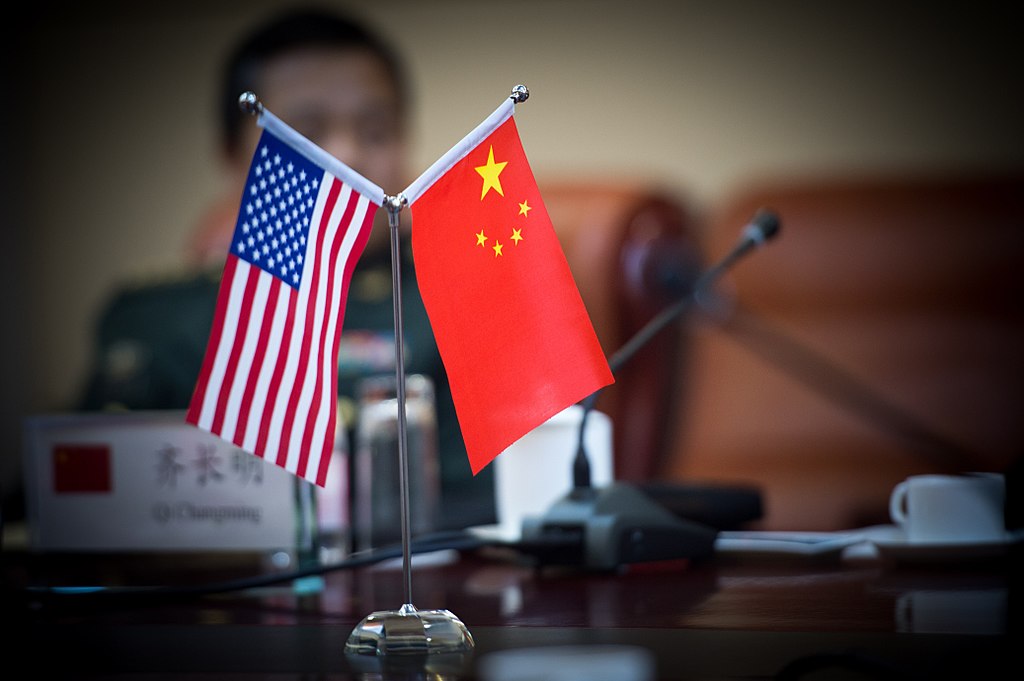
International Monetary Fund (IMF) Managing Director Kristalina Georgieva urged the United States and China to de-escalate their trade tensions, warning that a potential disruption in the flow of rare earth materials could significantly harm global economic growth. Speaking after the IMF’s steering committee meeting, Georgieva emphasized that such a scenario would heighten uncertainty and threaten the fragile global recovery.
The discussions, held alongside the World Bank’s annual meetings, came amid renewed trade friction between the world’s two largest economies. The IMF recently raised its 2025 global GDP growth forecast to 3.2%, up from July’s 3.0% estimate, noting that financial conditions and tariff impacts have been milder than anticipated. However, the latest trade threats were not reflected in those projections.
Georgieva noted that while global resilience had exceeded expectations, the lingering uncertainty continued to cloud economic prospects. She said countries were committed to strengthening economic fundamentals, advancing regulatory reforms, and addressing global imbalances. “The performance of the world economy is less than we need it to be,” Georgieva added, cautioning that persistent instability has become “the new normal.”
Saudi Finance Minister Mohammed Al-Jadaan, chairing the IMF’s International Monetary and Financial Committee (IMFC), described the discussions as constructive and positive, highlighting the IMF’s crucial role in addressing challenges no single nation can solve alone. New Zealand Finance Minister Nicola Willis reaffirmed her country’s commitment to multilateral cooperation and free trade, while France’s development minister Eleonore Caroit expressed optimism about continued collaboration on climate and development financing.
The IMFC’s chair statement underscored risks from trade disruptions, rising debt, and geopolitical tensions, while also emphasizing opportunities arising from digitalization and demographic change. It reaffirmed central banks’ commitment to maintaining price stability and called for stronger oversight of financial risks related to artificial intelligence, non-bank institutions, and digital assets.