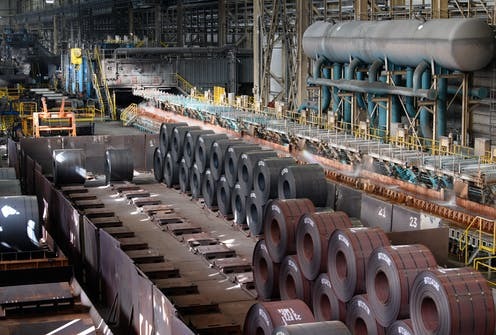
Indian steel mills are bracing for a significant price drop as U.S. import tariffs on steel and aluminum take effect on March 12, reshaping global trade flows. S&P Global estimates steel prices in India could decline by approximately 3,000 rupees ($34.52) per ton due to excess supply flooding the market.
Domestic steelmakers are already struggling with a surge in discounted imports from China, Japan, and South Korea, which hit record highs in the first ten months of the fiscal year. Last August, Indian steel prices plunged to a three-year low, with hot rolled coils averaging 52,267 rupees per ton.
The 25% tariffs imposed by the U.S. have made exports to America less viable, forcing major steel-producing countries to redirect shipments elsewhere. India, which sources 40% of its steel imports from Japan and South Korea, is expected to see an even higher influx from these nations. Currently, Japanese and South Korean steel account for 15% of total U.S. imports.
S&P Global Ratings analyst Ayushman Bharati warned that growing geopolitical tensions and shifting trade dynamics are increasing uncertainty for Indian steel producers. Additionally, the country recently expanded its steel production capacity by 15 million tonnes in 2024. However, weak prices could slow down capacity utilization and expansion efforts.
Chinese steel imports, often priced up to $70 per metric ton lower than domestic steel, have already squeezed the profit margins of Indian producers. With the new tariffs further disrupting global trade, Indian steelmakers face heightened competition and pricing pressures in the months ahead.