
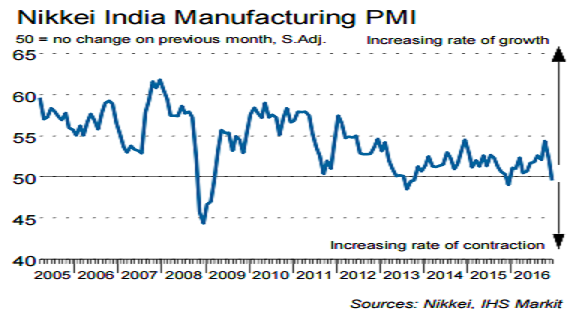
The manufacturing sector of the Indian sub-continent dropped below the 50-point neutral mark for the first time in 2016 amid a cash crunch scenario and as output as well as new orders dipped during the month of December. Further, companies have reduced their buying levels as input cost accelerated during the period.
The headline seasonally adjusted Nikkei India Manufacturing Purchasing Managers’ Index (PMI) recorded below the crucial 50.0 threshold for the first time in 2016 during December. Down from 52.3 in November to 49.6, the latest reading was indicative of a marginal deterioration in the health of the sector. Nevertheless, the average over the October-December quarter (52.1) was broadly in line with that seen in the July-September period (52.2).
Four of the five sub-components of the PMI edged below 50.0, while average delivery times stretched further. At the sector level, operating conditions deteriorated in both the consumer and intermediate goods categories.
Cash shortages and lower workplace activity resulted in job shedding and falling buying levels during December. Higher prices paid for a range of raw materials led average cost burdens to increase for the fifteenth straight month in December, with the rate of inflation picking up since November.
Finally, cash flow issues reportedly impaired manufacturers’ ability to work on outstanding business. Backlogs rose for the seventh consecutive month, but at the slowest rate in this sequence.
"As the survey showed only a mild decline in manufacturing production in the last month of the year, the average reading for the Oct-Dec quarter remained in growth terrain, thereby suggesting a positive contribution from the sector to overall GDP in Q3 FY16/17. With the window for exchanging notes having closed at the end of December, January data will be key in showing whether the sector will see a quick rebound," said Pollyanna De Lima, Economist at IHS, Markit.
Meanwhile, the USD/INR traded at 68.02, down -0.20 percent at 8:00GMT.

