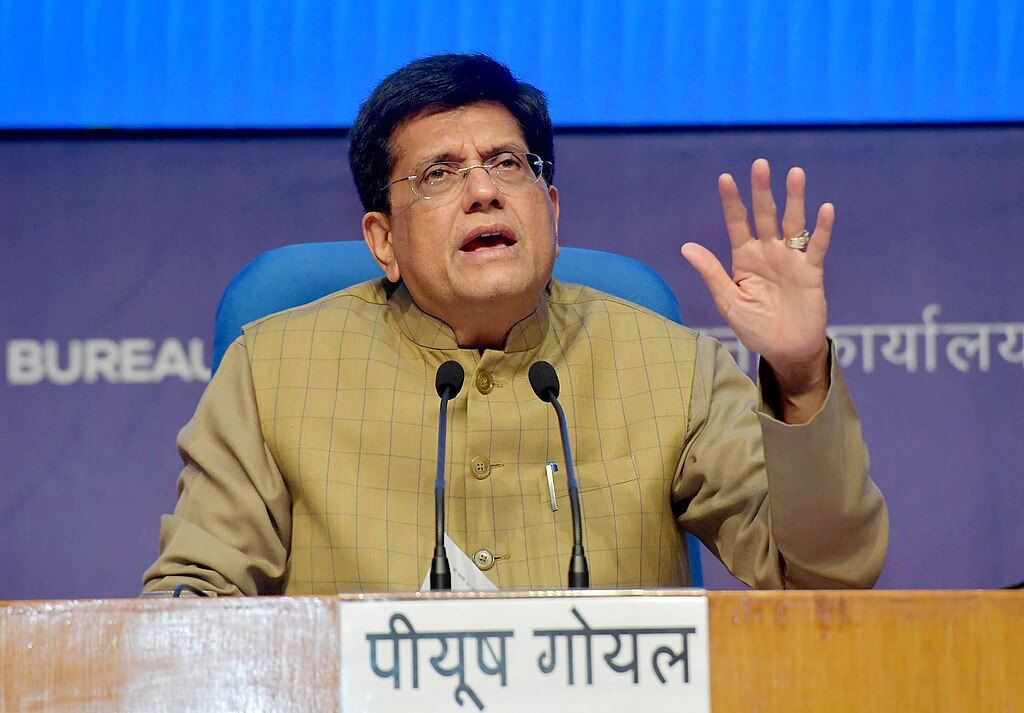
India’s Trade Minister Piyush Goyal has embarked on a sudden visit to the U.S. to discuss trade relations, just weeks ahead of the planned reciprocal tariffs by the Trump administration. His trip, which comes after canceling prior engagements, aims to assess the impact of these tariffs on Indian exports and negotiate potential concessions to ease trade tensions.
During Prime Minister Narendra Modi’s recent visit, both nations agreed to work toward a phased trade deal by fall 2025, targeting $500 billion in bilateral trade by 2030. However, the proposed U.S. tariffs, set to take effect in early April, could significantly impact India’s exports, with analysts estimating potential losses of $7 billion annually. Key vulnerable sectors include chemicals, metals, automobiles, pharmaceuticals, jewelry, and food products.
Goyal is expected to seek clarity on the tariffs and explore ways to mitigate their effects, particularly on Indian industries. While India is open to reducing tariffs on industrial goods like automobiles and chemicals, it remains firm on protecting agricultural tariffs to safeguard millions of farmers.
To foster better trade relations, India has already lowered tariffs on high-end motorcycles and bourbon whiskey and has committed to reviewing other tariff structures. The country has also increased energy imports and defense purchases to balance trade.
The U.S. remains India’s largest trading partner, with bilateral trade exceeding $106 billion in the first ten months of the fiscal year, reflecting an 8% year-on-year increase. India maintains a trade surplus, but expanding reciprocal tariffs, especially on agricultural goods like shrimp and dairy, could disrupt export growth.
Goyal’s visit is crucial in determining the future of India-U.S. trade ties as both nations navigate tariff negotiations and economic diplomacy.