


 Robinhood Chain Eyes Priority Gas Auctions for Faster Trades
  Elon Musk's X to Launch In-App Payment Services on Social Media Platform in Mid-2024
  Polkadot Launches dotUSD Stablecoin as DOT Price Falls
  OpenAI Revenue Hits $50 Billion, Below Earlier $70 Billion Estimate
  RedotPay Completes Audits as Stablecoin Firm Advances U.S. IPO Plans
  WeBank Eyes 'Open Consortium Chain 2.0' Amid Shift to More Public-Oriented Blockchains
  Tencent Shares Fall as $5 Billion AI Bond Sale Weighed
  Oracle Uses Trucked Natural Gas to Power AI Data Centers Amid Pipeline Delays
  Standard Chartered Joins China's Digital Yuan Trials, Eyes Cross-Border Payments
  Chime Forecasts Strong 2026 Revenue Growth, Shares Jump on Profit Outlook
  Mastercard Partners with MoonPay to Unlock Web3 Capabilities in Experiential Marketing
  Ledger Investigates Alleged $86 Million Crypto Wallet Theft
  Morgan Stanley Raises Coinbase Stock Price Target to $258 Ahead of Earnings
  Standard Chartered’s Investment Arm, SBI Holdings to Set Up Digital Asset Joint Venture in the UAE
  Crypto Investment Platforms eToro and M2 Granted Approvals to Operate in the UAE
  Mastercard, NEC Collaborate to Revolutionize Checkout Experiences with Facial Recognition Technology
  OpenAI Annualized Revenue Hits $50 Billion, Below Earlier Estimates


 Add as a preferred source on Google
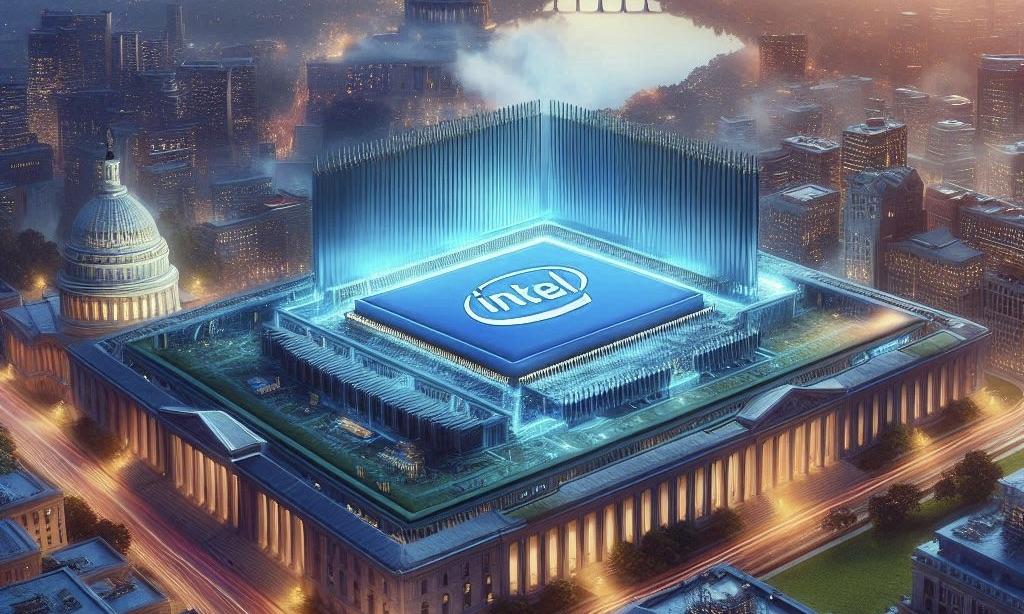
Intel has secured $8.5 billion in new funding as it continues a strategic overhaul, including separating its chip manufacturing arm and reducing its real estate footprint. The funding, including government backing, highlights the company's pivotal role in national security and its recovery efforts.
Intel Secures Billions in Funding, Strengthening Its Role in National Security and Recovery Plans
At one time, Intel was a dominant force in the semiconductor industry; however, its market capitalization has recently declined below that of Starbucks. This decline has piqued the interest of bargain seekers, who are convinced that the U.S. government would not permit the failure of a company of such strategic importance. Intel has reportedly received $8.5 billion in new funding in the past few days. This is consistent with this perspective and suggests that the chipmaker has regained confidence in its recovery prospects.
Intel received official authorization for $3.5 billion in direct financing under the Department of Defense's Secure Enclave program on September 16. This program is designed to enhance the production of advanced semiconductors for defense purposes. This is in addition to the $8.5 billion in grants and $11 billion in financing that Intel is expected to receive under the CHIPS Act, further emphasizing the company's strategic significance to national security.
Apollo Global, a prominent asset management firm that manages nearly $350 billion in assets, has reportedly expressed an inclination to make an "equity-like" investment of up to $5 billion in Intel in a recent development. Bloomberg has reported that this action is a substantial endorsement of Intel's recently disclosed revival strategy.
Intel Restructures Chip Manufacturing Arm, Aims for Cost Cuts and Future Growth with 18A Process
Intel is currently in the process of separating its chip manufacturing arm into a separate subsidiary. According to Wccftech, this move will distinguish the company's design and manufacturing divisions, potentially enticing new customers. The company also strives to reduce its real estate footprint by two-thirds by the end of the year, delay the inauguration of an advanced packaging factory in Malaysia, and halt factory construction in Poland and Germany for two years. Additionally, it is pursuing $10 billion in cost-saving measures. In addition, Intel has already implemented approximately half of its planned redundancies, with approximately 15,000 employees scheduled to depart by the end of 2024.
Intel's new 18A process, compatible with TSMC's 2nm process and is anticipated to commence commercial production in 2025, continues to rely on Broadcom and Amazon as key anchor customers. In the interim, there have been allegations of exploratory takeover discussions between Qualcomm and Intel. Although the formal agreement has yet to be reached, such a transaction would significantly affect the semiconductor industry.
Nevertheless, the probability of a Qualcomm acquisition decreases as Intel secures additional funding. Despite Qualcomm's interest, it may be difficult for the company to secure financing for a transaction due to Intel's substantial manufacturing assets and valuation. Intel's 15 fabrication facilities are individually valued at approximately $150 billion. Intel generates additional opportunities to execute its comprehensive overhaul with each new investment, which may diminish the allure of a takeover.







