


 US Appeals Court Keeps Trump IRS Case Sanctions in Place
  TSA Removes Chairs for Airport ID Check Officers
  US Waives Egypt Military Aid Conditions Over Iran War Role
  Lula Leads Flavio Bolsonaro 48%-45% in Datafolha Poll
  Russia Warns NATO of Nuclear Response Over Kaliningrad
  Netanyahu Says Israel May Join Flydubai Crash Attempt Probe
  New Zealand Election Raises Policy Uncertainty for Investors
  Ukraine Deploys FP-7 Ballistic Missile in Combat for First Time
  US Alcohol Ban Exposes Canada’s Internal Trade Barriers
  Trump Demands Powell Resign Over Fed Renovation Cost Overruns
  Israel Tightens Pilot Security After Flydubai Incident
  Trump Praises Boeing 737 Max After Flydubai Crash Attempt
  Israeli Settler Attack in West Bank Kills Palestinian
  Wicker Urges US to Uphold Taiwan Security Commitments
  California Leads Lawsuit Over Trump’s $810 Million Funding Cuts
  Brazil Presidential Debate Canceled as Lula, Bolsonaro Skip Event


 Add as a preferred source on Google
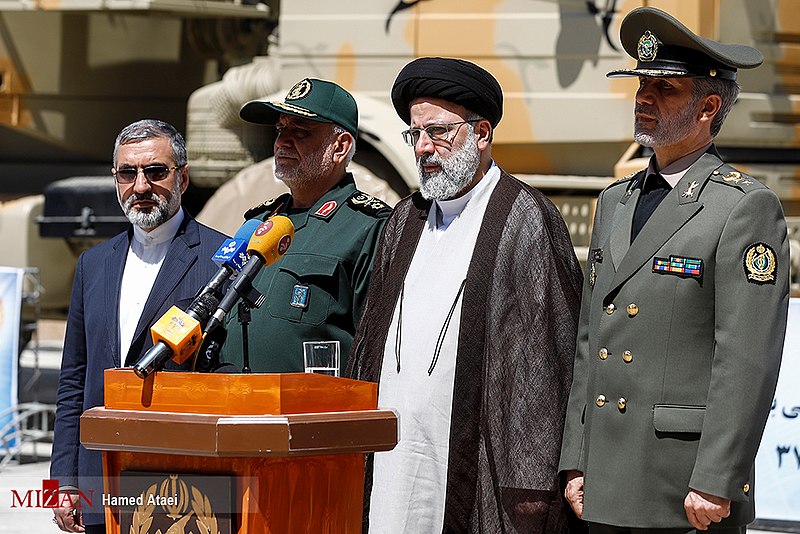
Iranian President Ebrahim Raisi pledged over the weekend to continue pursuing the crackdown on the ongoing protests across the country. Raisi’s pledge comes amidst criticism from a prominent cleric on the recent protest-related execution.
Speaking at a ceremony honoring the country’s security forces that were killed in the demonstrations Friday last week, Raisi said that the crackdown on the protesters would continue to be pursued. Raisi’s pledge came a day after a man named Mohsen Shekari was hanged after getting convicted for injuring a security guard with a knife and blocking a street in central Tehran. The execution of Shekari was the first execution made by the Iranian judiciary related to the widespread protests.
Sunni cleric Molavi Abdolhamid, however, criticized the execution of Shekari in a statement on his website. Abdolhamid also urged the predominantly Shi’ite Islamic Republic to listen to the protesters.
“When someone has not killed but only blocked a road and stabbed and injured a Basij member with a knife, he cannot be put to death under Sharia,” said Abdolhamid, referring to the Tehran-backed militia group that took part in the crackdown on the protests.
“Listen to these protests and negotiate with the people of Iran. Beating, killing, and executing this nation is not right. This protest will not be quelled by killing people,” said the cleric.
Protests have erupted across the country since September following the death of Kurdish-Iranian Mahsa Amini. Amini died in the custody of the morality police days after she was arrested for supposedly flouting the dress code on women imposed by the Islamic Republic. Tehran has sought to blame its enemies, such as the United States, for the unrest, which has led to sanctions and widespread condemnation.
Australian foreign minister Penny Wong announced Saturday that the Australian government would be sanctioning Iran as well as Russia for “egregious” human rights violations. In a statement, Wong said the morality police and the Basij militia, as well as six other Iranians linked to the crackdown, would be targeted with Magnitsky-style sanctions.
In a piece for the Sydney Morning Herald, Wong said the six individuals included are Sadegh Hosseini, who was described as a senior commander of Iran’s Revolutionary Guard Corps. Wong said Hosseini was being targeted by sanctions for his alleged involvement in the “indiscriminate use of violence against protesters.”







