


 South Korea Warns Ukraine Over North Korean POW Dispute
  Wicker Urges US to Uphold Taiwan Security Commitments
  Israeli Settler Attack in West Bank Kills Palestinian
  TRUMP Memecoin Launches New Dinner Contest
  Lula Leads Flavio Bolsonaro 48%-45% in Datafolha Poll
  Ukraine Deploys FP-7 Ballistic Missile in Combat for First Time
  US Officials See China Taiwan Invasion Before 2028 as Less Likely
  US Conducts Non-Nuclear Explosion Test to Boost Nuclear Detection
  Trump Says He Raised Political Prisoners With Xi
  Brazil Presidential Debate Canceled as Lula, Bolsonaro Skip Event
  US Waives $320M Egypt Military Aid Conditions After Iran War Role
  Flydubai Co-Pilot Tried to Crash Israel-Bound Jet, Netanyahu Says
  Iran Plans Stronger Response if US Attacks Resume
  New Zealand Election Raises Policy Uncertainty for Investors
  US Appeals Court Keeps Trump IRS Case Sanctions in Place
  Tsai Ing-wen to Visit US for Stanford Security Conference


 Add as a preferred source on Google
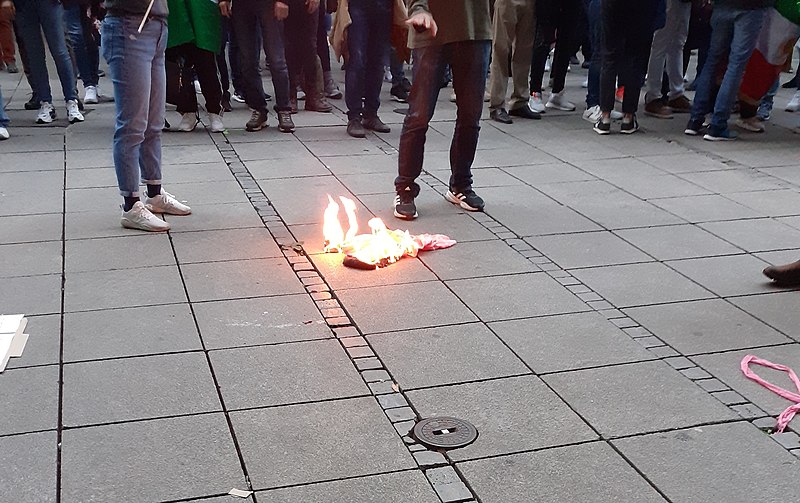
The state security body in Iran has given its estimate of the number of people killed in the country as a result of the ongoing protests. The initial assessment of the security body said that over 200 people were killed in the demonstrations.
The Iranian interior ministry’s state security council issued a statement Saturday with its assessment of the number of fatalities resulting from the ongoing protests. The council said that over 200 people have been killed in the unrest, including the security forces killed in “terrorist acts” and those killed by so-called foreign groups that were framed as killed by security forces, as well as “armed anti-revolutionary elements who were members of secessionist groups.”
The security body also included “innocent people who have died in conditions of security disarray” in its assessment. However, the security body did not reveal how those people were killed. The announcement by the council came a day after Islamic Revolutionary Guard General Amir Ali Hajizadeh said that over 300 were “martyred” and died in the ongoing protests that started in September.
The figures provided by Hajizadeh and the state security council are lower than what rights groups have provided, which is higher than 400.
The statement also stressed the role of foreign intervention in the demonstrations, saying that the Islamic Republic has been facing a “hybrid war” waged by its adversaries and “terrorist” media groups. Tehran has sought to blame the United States, the United Kingdom, Israel, and Saudi Arabia for fomenting the protests that erupted in September following the death of Kurdish-Iranian Mahsa Amini in the custody of its morality police for allegedly flouting the dress code imposed on women.
The Iranian judiciary announced that it has executed four people accused of cooperating with Israeli intelligence by hanging early Sunday. The judiciary said the four accused were “thugs” that were guided by Israeli intelligence as they allegedly engaged in the destruction of public property, theft, kidnappings, and obtaining fake confessions.
The judiciary said the four people accused received instructions from an operative of the Israeli intelligence agency Mossad who is based in Sweden. The four also allegedly received their payment in cryptocurrencies to buy weapons and equipment.







