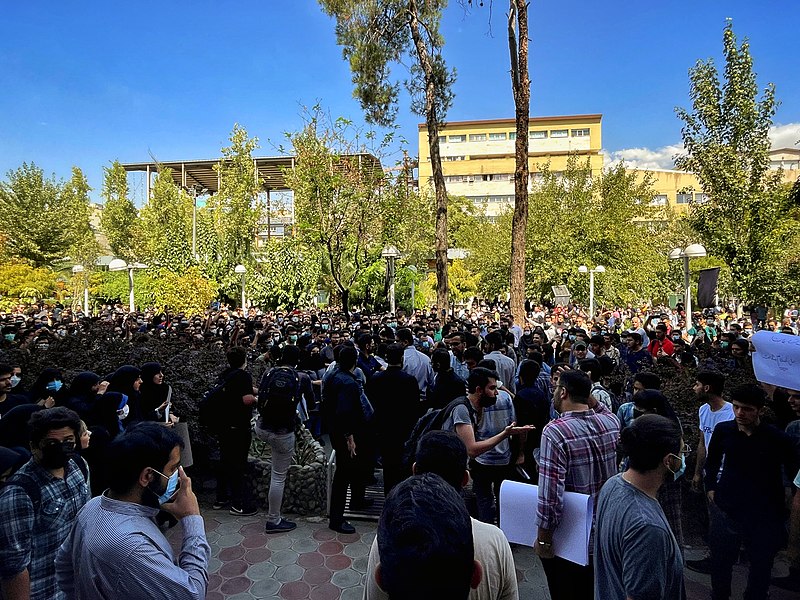
Widespread protests have been taking place in Iran for more than a month since September, with security forces attempting to crack down on the demonstrations. With the Islamic Republic coming under heavy scrutiny, Germany and several member countries of the European Union are reportedly planning to expand their sanctions, targeting more individuals and entities over the crackdown.
According to a report by Der Spiegel over the weekend, Germany and eight other EU countries are planning to expand their sanctions on Iran to include individuals and organizations that are linked to the violence against the demonstrators in the anti-government protests.
The report noted a package of 31 proposals was introduced in Brussels on Wednesday, which targeted individuals and entities in the security sector as well as companies that are behind the repression of the protesters in Iran.
The potential measures include asset freezes and travel bans, and the package had a chance of being approved when the bloc’s foreign ministers in their next meeting on November 14.
This comes as ties between Tehran and the West have been strained since the protests that have been going on for more than a month. The protests were sparked by the death of Kurdish-Iranian woman Mahsa Amini, who died three days after she was detained by the Islamic Republic’s Morality Police for improper attire.
Women and students played a major part in the demonstrations as many called for the fall of the country’s clerical rulers in the biggest show of opposition since the 1979 Revolution. Tehran has blamed its adversaries, the United States and Israel, for the unrest.
Friday last week, Tehran held state-sponsored rallies celebrating the 1979 seizure of the US embassy in the country. At the time of the seizure, students stormed the embassy after the fall of the US-backed Shah Mohammad Reza Pahlavi, holding 52 Americans hostage for 444 days.
The pro-establishment rallies came in contrast to the anti-government demonstrations, with Iranian President Ebrahim Raisi and foreign minister Hossein Amirabdollahian criticizing US President Joe Biden for vowing to “free Iran.”
The current protests also differed from the previous shows of opposition to the clerical rule, as the demonstrators included the Sunnis and Kurds looking to change the country’s political order.