Iran’s leaders are looking to crack down on the ongoing protests that have been taking place for more than a month. The European Union and Germany are considering designating Iran’s Revolutionary Guards as a “terrorist organization” following the warning given to demonstrators.
German foreign minister Annalena Baerbock said Sunday that Berlin and the bloc are considering designating the IRGC as a “terrorist organization” following the warning by the IRGC chief on the demonstrators Saturday that it would be their last day of protesting against the government. The warning is seen as a sign that Tehran may ramp up its crackdown on the demonstrations.
“I made it clear last week that we will launch another package of sanctions, that we will examine how we can also list the Revolutionary Guards as a terrorist organization,” Baerbock told broadcaster ARD.
Germany said last week that it was tightening entry restrictions on Iran even as the EU already announced a package of sanctions on Tehran. Baerbock also said that there are currently no discussions between Iran and the West, likely referring to the nuclear deal.
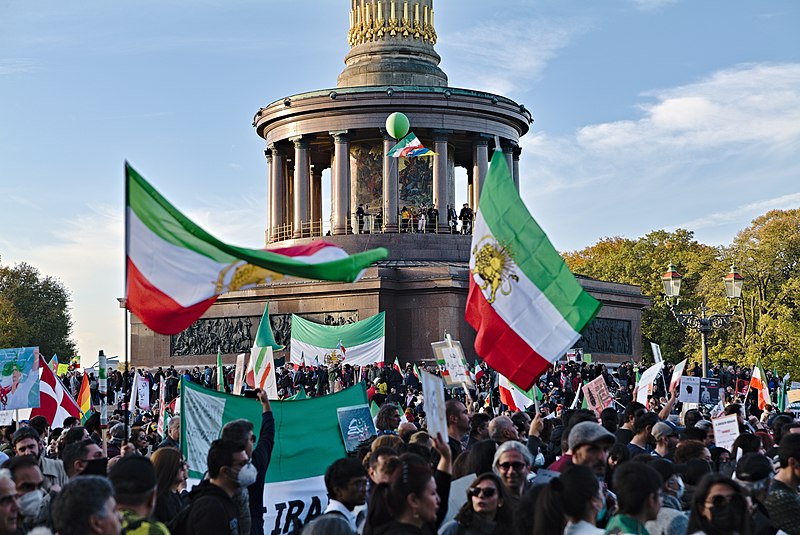
Anti-government protests have been taking place across the country and even internationally, following the death of Kurdish Iranian Mahsa Amini, who passed away three days after she was arrested by Iran’s morality police over improper attire. Hundreds of thousands of people in the country have called for the end of the country’s clerical rulers, with women and students playing a major role in the protests.
On the same day, students defied the ultimatum given by the IRGC and the warning by Iranian President Ebrahim Raisi by continuing the protests. Security forces used tear gas and opened fire on the demonstrators as a result of confrontations at universities across the country, according to videos circulating on social media.
“Security is the red line of the Islamic Republic and we will not allow the enemy to implement in any way its plans to undermine this valuable national asset,” said Raisi according to state media.
Tehran has accused its foreign rivals, the local agents of Israel and the United States, of using the unrest to destabilize the country.