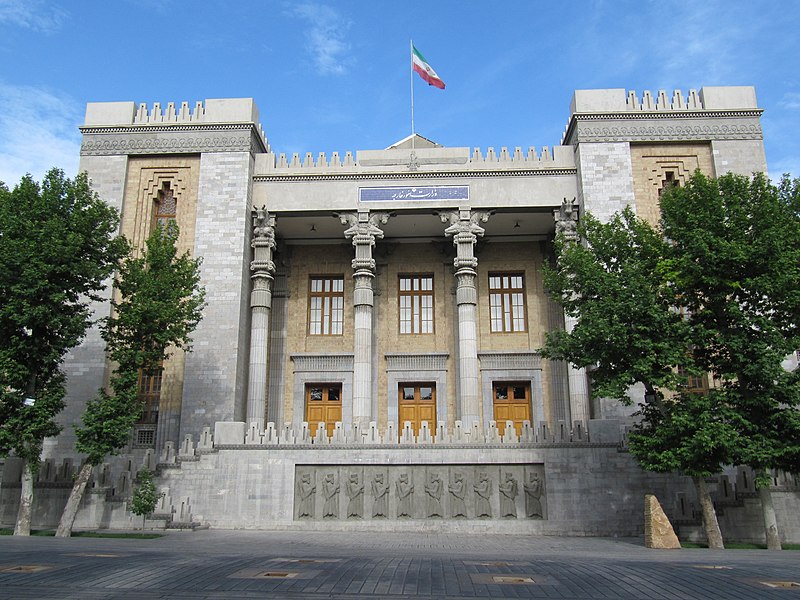
Iran’s foreign ministry said Monday that they are not to blame for the stabbing of novelist Salman Rushdie. The ministry said Rushdie and his supporters are the ones who bear responsibility for the incident.
The Iranian foreign ministry said Monday that no one had the right to blame Iran for the stabbing of Rushdie Friday last week. The ministry added that Rushdie and his supporters bear the responsibility and deserved condemnation.
Ministry spokesperson Nasser Kanani said freedom of speech is not a justification for Rushdie’s works that were deemed insulting.
“The attack on Salman Rushdie, we do not consider anyone other than himself and his supporters worthy of reproach and condemnation,” Kanani told reporters. “No one has the right to accuse Iran in this regard.”
Rushdie is currently recovering after getting stabbed during his public appearance in New York. The novelist has drawn the ire of Iranian authorities through his works and has been on the receiving end of death threats for decades.
Rushdie’s 1988 novel “The Satanic Verses” was deemed as containing blasphemous passages according to some Muslims. The year after the novel was published, then-Iranian Supreme Leader Ayatollah Ruhollah Khomeini issued an edict calling on Muslims to kill Rushdie and anyone else involved in the publishing of the book.
Even with Iran’s reaction to Rushdie’s stabbing, other writers and lawmakers all over the world have condemned the attack. Rushdie’s agent told Reuters that the novelist sustained severe injuries, including nerve damage in his arm and wounds to the liver. The agent said Rushdie would likely lose an eye as well.
A spokesperson for the British government criticized Iran’s suggestions that Rushdie and his supporters were to blame, calling the comments “ludicrous.” A spokesperson for the United States government also called the comments “outrageous.”
Meanwhile, Tehran has also responded to the final proposal by the European Union that would help restart the 2015 nuclear deal with world powers. Iranian foreign minister Hossein Amirabdollahian called on Washington to show flexibility to resolve the three issues that remain in the way of restoring the agreement.
The United States, however, said the deal could be restored if Iran would drop the “extraneous” issues, referencing Tehran’s demand that the UN nuclear watchdog to close the investigation on the uranium traces in a facility, and its Revolutionary Guards be removed from the US Foreign Terrorist Organization designation.