


 Nvidia China Chip Sales Report Sends Chinese Semiconductor Stocks Lower
  Asian Stocks Rise as Chipmakers Rally on Micron Earnings
  South Korea Exports Surge 83.5% on AI Chip Boom
  Robinhood Stock Nears $114 as Jobs Data Boosts Risk Appetite
  Goldman Sachs Names CATL, Zenergy Top China Battery Picks
  Australia Inflation Accelerates to 4% After RBA Rate Hike
  OpenAI Scraps GPT-6.1 Astra Launch Over Safety Concerns
  Sanofi, Regeneron Expand Drug Partnership in $8 Billion Deal
  Pi Network Price Holds $0.087 as Protocol 28 Mainnet Upgrade Nears
  Fed’s Logan Signals 50 Basis Points More in Rate Hikes
  Bank of America Sees EUR/USD at 1.15 by Year-End
  Apple iPhone 18 Pro Sales Jump 12% in China
  California AG Subpoenas OpenAI Over AI Cybersecurity Incidents
  IMF Says Global Bond Markets Remain Orderly Despite Yield Surge
  Coinbase, Circle Stocks Slide as Bank Group Sues OCC Over Crypto Charters
  Ripple Locks 700 Million XRP Back in Escrow After October Release
  MSTR Stock Rises 3% as Strategy Challenges MSCI Bitcoin Stance


 Add as a preferred source on Google
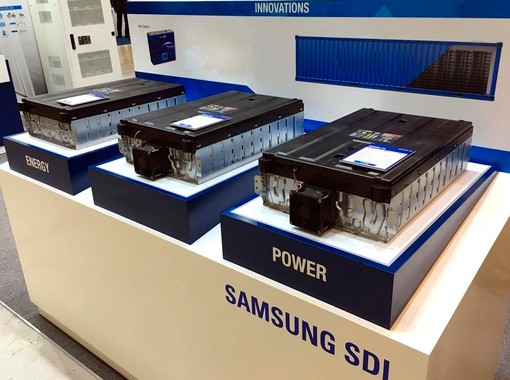
Samsung SDI shares traded on South Korea’s Kospi bourse took a battering early this week after Morgan Stanley downgraded its target price from 570,000 won to 550,000 won.
On Monday, Samsung SDI shares shed 1.7 trillion won in market cap, as the stock price dropped 3.91 percent, while the shares traded mostly flat on Tuesday near the previous day’s close at 615,000 won.
Morgan Stanley made the downgrade as battery manufacturers are failing to generate enough profits since their primary focus is currently on expansion and market share.
However, local experts question whether the Morgan Stanley downgrade is fair, pointing out that Samsung SDI's strategy is putting profitability ahead of expansion plans.
Han Byung-hwa, an analyst at Eugene Investment & Securities, noted that unlike rivals LG Energy Solution and SK Innovation, Samsung SDI doesn’t have a US battery plant and a joint venture with automakers.
LG Energy Solution and SK Innovation, have made ambitious tie-ups and expansion plans, even targeting the US market, which is the world’s largest.
Han added that Samsung SDI lacks the motivation to build a new battery plant in the US as it does not have automaker partners there who can guarantee massive battery supply deals.
The top US automakers with key participation in President Joe Biden’s push for EVs, GM and Ford, have already formed joined ventures with its LGES and SKI.
Samsung SDI recently signed a deal to supply batteries to Rivian, a local EV startup backed by investments from Amazon and Ford, and consolidated partnership with loyal clients such as BMW.
Samsung SDI and BMW will collaborate to develop a next-generation battery.
But Samsung SDI has to foray into the US by 2022 at the latest, should it decide to do so, since, under the United States-Mexico-Canada Agreement, automakers will have to certify by 2023 that 75 percent of their EV components are made in one of the three countries to avoid tariffs in the region.
Also, Samsung Group can’t go all-in on the batteries as their priority is on other businesses such smartphones, chips, and auto parts.
Furthermore, rather than splurge money on expanding its lithium-ion battery manufacturing capabilities, Samsung SDI is likely to divert its investments into the research and development of next-generation solid-state batteries.







