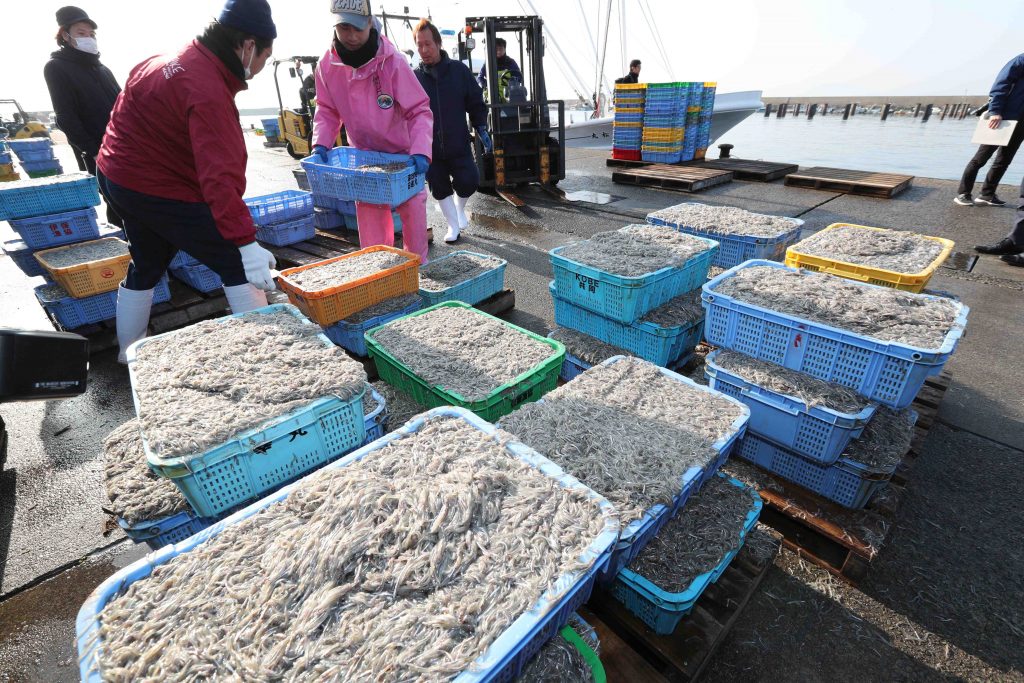
Israel has removed import restrictions on food items from Japan imposed due to the 2011 Fukushima nuclear disaster, reducing the number of countries and regions with such trade policies to 15.
All Fukushima food products and some items such as grain, seafood, and mushrooms from Iwate, Miyagi, Tochigi, Gunma, and Chiba prefectures were subjected to the import restrictions.
The restrictions include submitting radiation inspection certificates and having all the items tested upon entry.
Japan farm minister Kotaro Nogami urged countries and regions retaining import restrictions to ease or eliminate them
Israel is now among 39 countries and regions that have lifted import restrictions.
The 15 countries and regions maintaining restrictions on Japanese food imports include China, South Korea, and the US.


Oil Prices Rebound as U.S.-Venezuela Tensions Offset Oversupply Concerns
Russia Stocks End Flat as Energy and Retail Shares Show Mixed Performance
Dollar Struggles as Markets Eye Key Central Bank Decisions and Global Rate Outlooks
Korea Zinc Plans $6.78 Billion U.S. Smelter Investment With Government Partnership
Korea Zinc to Build $7.4 Billion Critical Minerals Refinery in Tennessee With U.S. Government Backing
New Zealand Budget Outlook Shows Prolonged Deficits Despite Economic Recovery Hopes
U.S. Stock Futures Mixed as Tech and AI Stocks Face Pressure Ahead of CPI Data
Asian Stocks Slide as Central Bank Decisions and Key Data Keep Investors Cautious
China’s November Economic Data Signals Slowing Industrial Output and Weak Consumer Demand
Asian Technology and Chipmaking Stocks Slide as AI Spending Concerns Shake Markets
Australian Consumer Sentiment Slumps in Early December as Inflation Fears Resurface
Bank of Korea Downplays Liquidity’s Role in Weak Won and Housing Price Surge
China’s Small Bank Consolidation Struggles as Profits Fall and Risks Persist
Asian Currencies Trade Sideways as Dollar Weakens Ahead of Key U.S. Data
Fed Near Neutral Signals Caution Ahead, Shifting Focus to Fixed Income in 2026 


