


 Trump Plans White House Shake-Up of Key AI Safety Agency
  US Judge Blocks Trump Administration’s Taxpayer-Funded Political Ads
  Trump Denies Russia and China Are Helping Iran in U.S. Conflict
  Most Americans Oppose Election Betting on Prediction Markets, Poll Finds
  Kim Jong Un Showcases ICBM Ahead of Possible Trump Meeting
  US Supreme Court Denies Release of Anti-ICE Activist Kyle Wagner
  Trump Announces Russia-Ukraine Energy Ceasefire as Zelenskiy Awaits Details
  US Authorities Raid Ilhan Omar’s Home Amid Immigration Fraud Probe
  Mahmoud Abbas Postpones Palestinian Elections to September 2027
  Zelenskiy Seeks New US Talks to Revive Ukraine-Russia Peace Negotiations
  Flavio Bolsonaro Backs Brazil’s 40-Hour Workweek Reform Ahead of Runoff
  Trump Defends Russian Diesel Deal Amid US Sanctions Backlash
  MI5 Warns of Rising Iran, Russia Threats and AI Bioweapon Risks
  Trump Sanctions International Criminal Court, Sparking EU Backlash
  Trump Denies China, Russia Are Helping Iran in War
  US Recalls Nicaragua Envoy After Ambassador Rejection
  European Auto Stocks Rise as EU-China Trade Deal Targets Hybrid Imports


 Add as a preferred source on Google
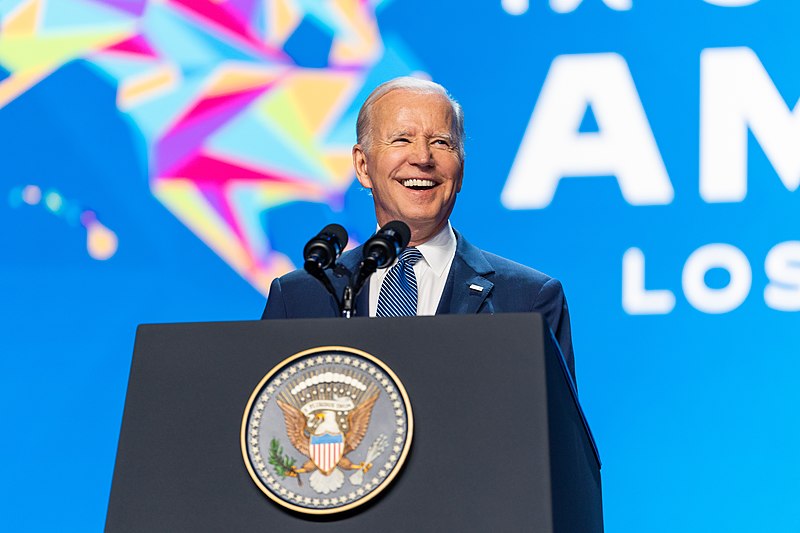
This week, US President Joe Biden signed legislation for the country’s Asian American Pacific Islander community. Biden signed the bill that would establish a museum for Asian Pacific history.
In a ceremony at the White House East Room Monday, Biden signed the legislation that would establish a museum dedicated to Asian Pacific history and culture, which would document the history and culture of the community in the country.
“I am honored to sign into law something that is long overdue and – the National Museum of Asian and Pacific American History and Culture here in Washington DC,” said the US leader in his remarks.
“Museums of this magnitude and consequence are going to inspire and educate. More than anything else, it is going to help people see themselves in the story of America – a story that makes us a better America, and it has made us a better America,” said Biden.
Vice President Kamala Harris, House Speaker Nancy Pelosi, and other members of Congress were also present at the signing.
In her remarks, Harris also talked about her Indian heritage, and that the museum will also tell the story of the hardships the Asian American and Pacific Islander community has faced in the country throughout its history, such as the Japanese internment camps and the Chinese Exclusion Act, the discrimination against South Asians following the 9/11 attacks among others.
The US leader also visited Philadelphia this week to speak at the AFL-CIO convention. Biden assured those in attendance that tackling the growing problem of inflation is a priority in his administration as the country grapples with rising prices.
In his remarks, Biden acknowledged that inflation is “sapping the strength of a lot of families,” which was worsened by Russia’s invasion of Ukraine.
However, despite assuring the public that his administration is prioritizing how to ease inflation, Biden admitted that he is running out of options to ease the price hikes due to an evenly-divided Senate and congressional Republicans determined to obstruct.
Biden touched on how these issues could make a difference in the upcoming midterms which would determine whether the Democratic Party maintains its majority or loses one or both chambers of Congress to the GOP.







