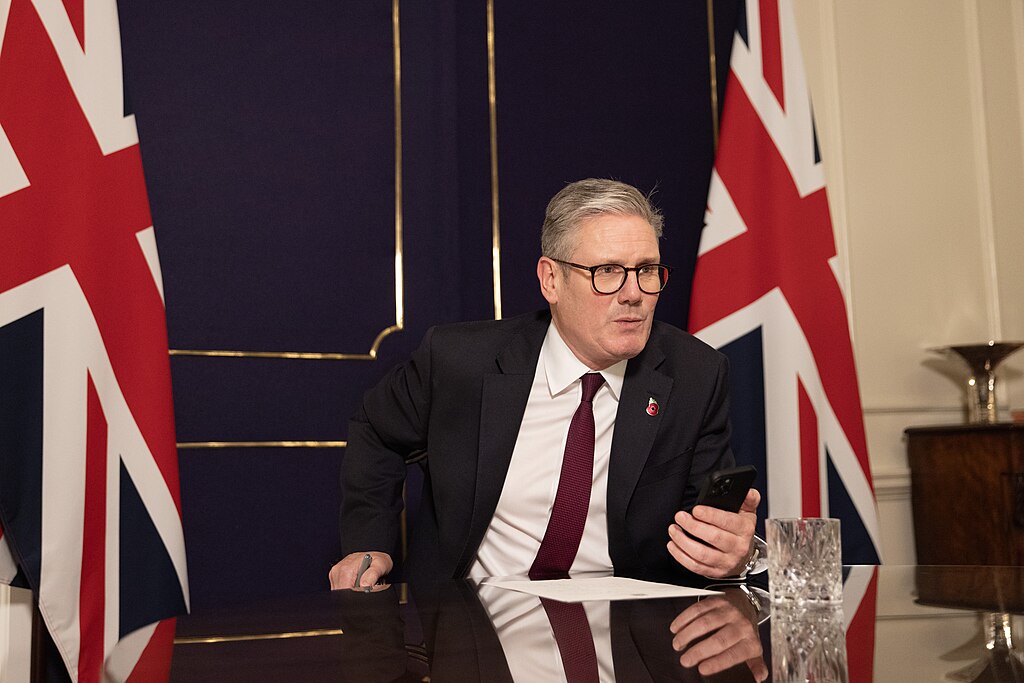
British Prime Minister Keir Starmer stated that a U.S. security commitment is essential for ensuring lasting peace in Ukraine, emphasizing that it is too early to determine the number of British troops that could be deployed. Following an emergency meeting of European leaders in Paris, Starmer highlighted the need for Europe to increase defense spending and take greater responsibility for continental security.
Starmer acknowledged that discussions on the role of U.S. security guarantees and potential peacekeeping missions are still in the early stages. However, he expressed readiness to commit British forces alongside other nations if a sustainable peace agreement is reached, underscoring that a U.S. backstop is crucial to deter future Russian aggression against Ukraine.
Starmer's remarks came ahead of his upcoming trip to Washington, where he will meet U.S. President Donald Trump to discuss the ongoing war between Ukraine and Russia, which has lasted nearly three years. The British Prime Minister also indicated that further talks with European leaders would follow his U.S. visit.
On Sunday, Starmer became the first European leader to express willingness to deploy peacekeeping troops in Ukraine, marking a significant stance in the region's geopolitical landscape. His comments reflect growing European acknowledgment of the need for stronger defense measures and transatlantic cooperation to support Ukraine's sovereignty and stability amid ongoing conflict.
The development signals a potential shift in Europe's defense posture, with Starmer's leadership advocating for a balanced approach that combines European responsibility with indispensable U.S. support to counter Russian threats and foster peace in the region.