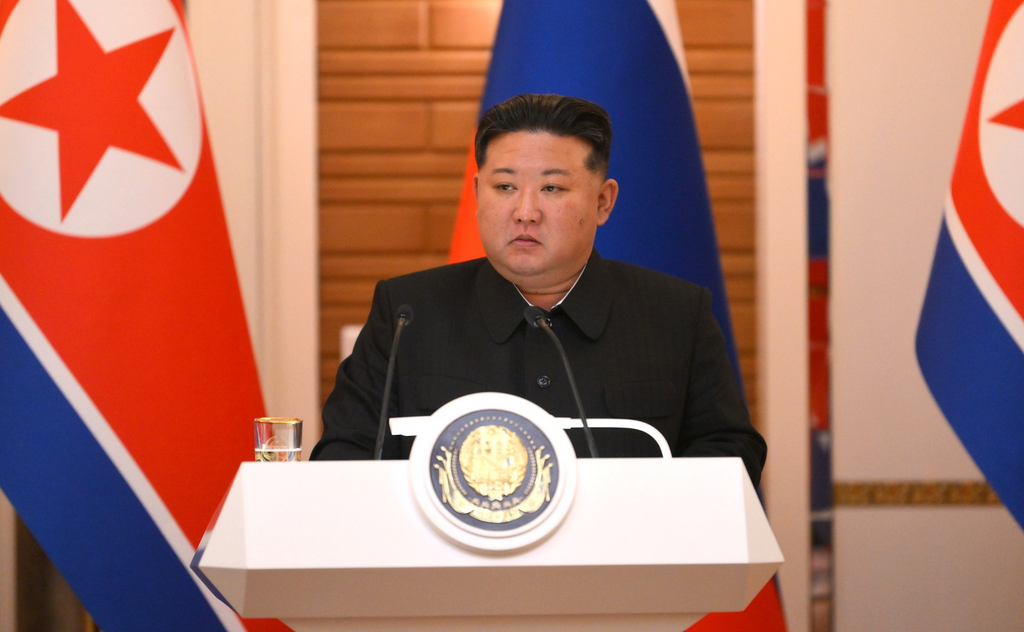
North Korean leader Kim Jong Un has reaffirmed his country's commitment to expanding its nuclear arsenal, declaring the nation's status as a nuclear-armed state irreversible. Speaking before the Supreme People's Assembly on Monday, Kim outlined sweeping policy priorities that signal a sharper break from past diplomatic overtures and a more aggressive posture toward both Seoul and Washington.
Kim made clear that Pyongyang would never trade its nuclear capabilities for economic incentives or security guarantees, arguing that its weapons program has already proven to be the right strategic path. He framed nuclear deterrence as not only essential to national survival but also as a contributor to regional stability and domestic economic progress, claiming it has freed resources for construction, development, and improving living standards.
In a pointed remark widely interpreted by South Korean analysts as a veiled criticism of recent U.S. military action against Iran, Kim warned that sovereign nations face serious threats in today's global order, reinforcing North Korea's long-held belief that nuclear weapons are the only reliable shield against foreign intervention.
Perhaps most significantly, Kim formally designated South Korea as North Korea's "most hostile state," warning that any encroachment on its sovereignty would be met with swift and unrestrained retaliation. Analysts say this declaration effectively strips South Korea of any remaining recognition as a fellow Korean nation, going well beyond past rhetoric and potentially signaling a constitutional redefinition of inter-Korean relations.
On the economic front, Kim called for full implementation of a new five-year development plan targeting industrial modernization, energy production, food security, and housing. The approved 2026 state budget allocates 15.8% of total expenditure to defense, with funds earmarked specifically for nuclear expansion. Russian President Vladimir Putin also sent a congratulatory message to the session, pledging to deepen Moscow's strategic partnership with Pyongyang.